Ethiopia is the birthplace of Arabica coffee. GreenBean Coffee exports premium Grade 1 and Grade 2 green beans from Yirgacheffe, Sidamo, and Guji to 40+ countries worldwide.
Ethiopia stands as the genetic origin of Coffea arabica, the species that accounts for approximately 60 percent of global coffee production. The country's contribution to coffee extends beyond commercial significance; it represents the original source of all Arabica genetic diversity and continues to hold unique importance for both the coffee industry and agricultural science.
Where Did Arabica Coffee Originate?
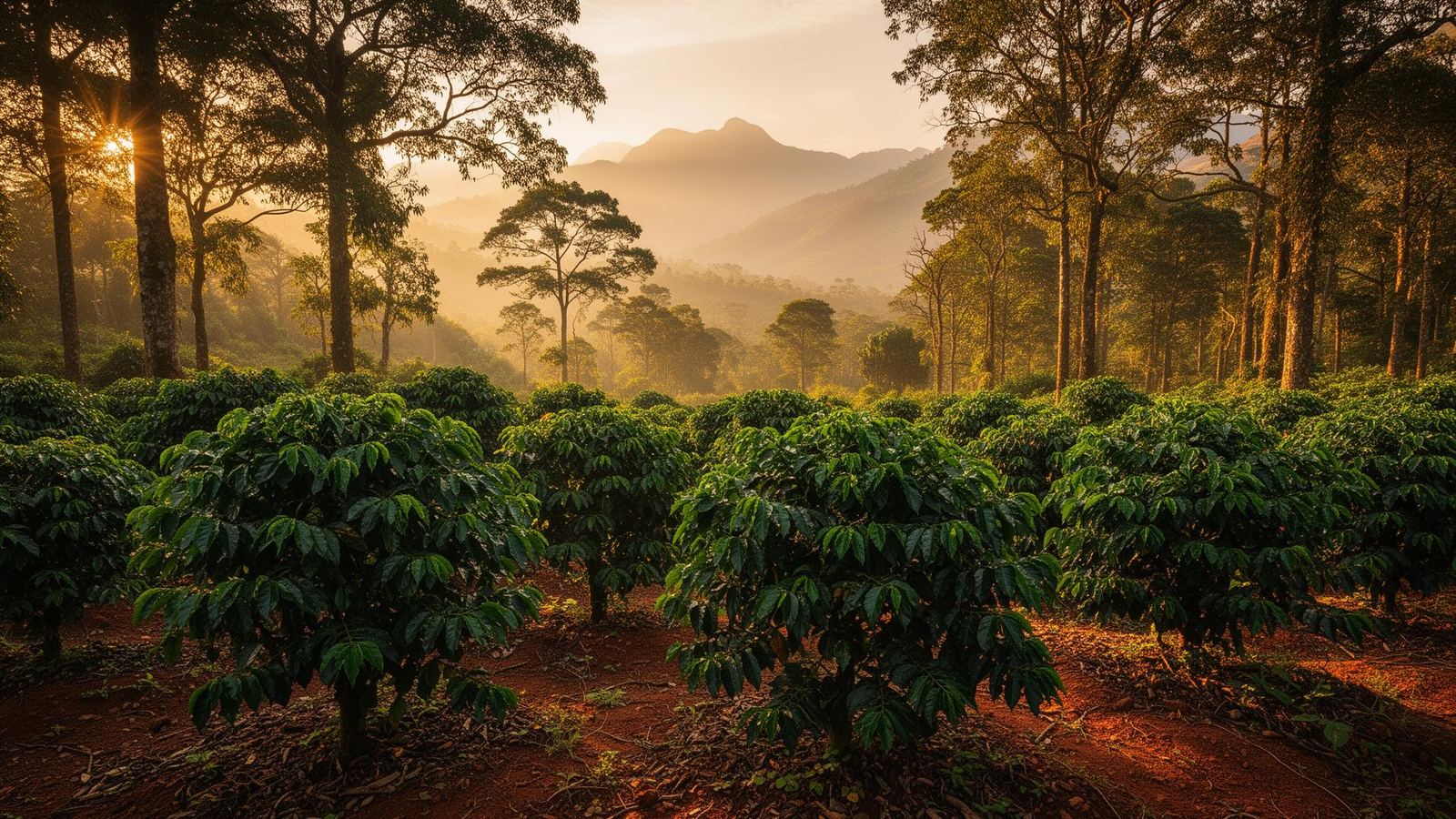
Arabica coffee originated in the highland forests of southwestern Ethiopia, where wild coffee plants still grow beneath the canopy of native trees, forming the genetic foundation of all global Arabica cultivation.
Arabica coffee originated in the highland forests of southwestern Ethiopia, where wild coffee plants still grow beneath the canopy of native trees. Unlike cultivated varieties found elsewhere in the world, Ethiopian coffee exists in its natural habitat, with thousands of genetically distinct populations dispersed across forest ecosystems. This wild diversity forms the foundation from which all global Arabica cultivation descends.
The forests of Kaffa, Illubabor, and surrounding regions contain coffee populations that have evolved over millennia in response to local conditions. These wild varieties exhibit genetic characteristics not found in commercial cultivars grown in Latin America, Asia, or other African countries. Researchers continue to study Ethiopian coffee forests as a source of genetic material for disease resistance, climate adaptation, and flavor development.
How Did Ethiopian Coffee Develop Historically?
Coffee's recognition as a stimulant predates recorded history. Key milestones include pre-10th century forest consumption, 15th–16th century export to Yemen, and the 2008 founding of the Ethiopian Commodity Exchange (ECX).
Coffee's discovery and early use in Ethiopia predates recorded history, though oral traditions place its recognition as a stimulant in the Ethiopian highlands centuries before its spread to Yemen and the broader world. The precise timeline remains subject to scholarly debate, but the following milestones mark key developments in Ethiopian coffee history:
- Pre-10th century: Coffee cherries consumed as food in Ethiopian forests; leaves used for tea-like infusions
- 10th–15th century: Coffee use documented in Ethiopian monastic and medicinal contexts
- 15th–16th century: Coffee seeds transported to Yemen; cultivation begins outside Ethiopia
- 17th century: European traders establish coffee trade routes; Ethiopian exports begin formal organization
- 20th century: Ethiopian Coffee Board established; formal grading systems introduced
- 2008: Ethiopian Commodity Exchange (ECX) founded, restructuring coffee trade
- 2017 onwards: Traceability reforms expand direct trade options alongside ECX

What Role Does Coffee Play in Ethiopian Culture and Economy?
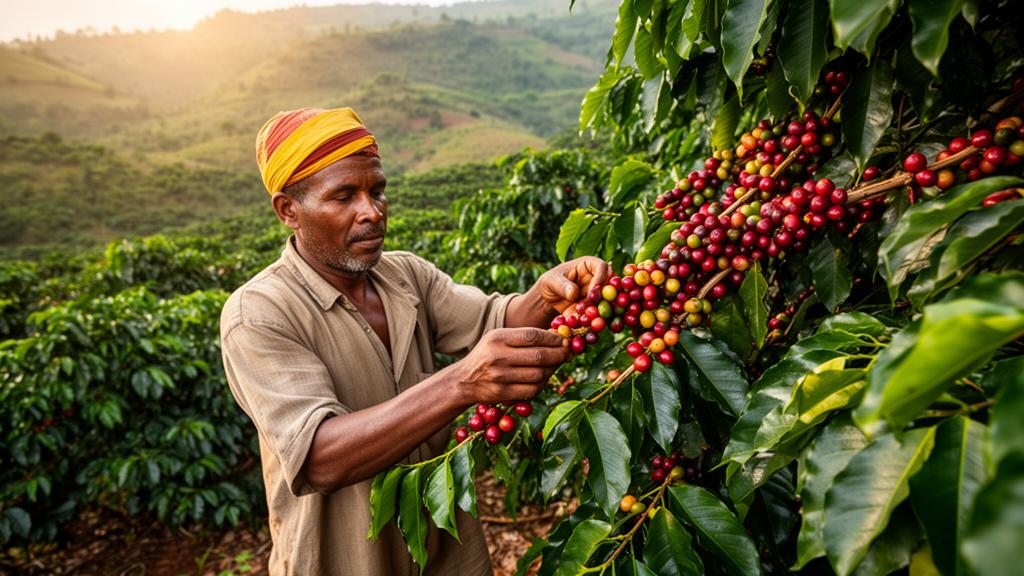
Coffee is Ethiopia's largest export commodity. Approximately 15 million Ethiopians depend on coffee production, accounting for roughly 30% of export earnings. The traditional coffee ceremony is central to Ethiopian social life.
Coffee occupies a central position in Ethiopian society, economy, and daily life. The coffee ceremony, a traditional practice of roasting, grinding, and brewing coffee in a communal setting, functions as both social institution and cultural expression. This ceremony takes place in homes, businesses, and public gatherings throughout the country.
Economically, coffee represents Ethiopia's largest export commodity by value. Approximately 15 million Ethiopians depend on coffee production for their livelihood, whether as smallholder farmers, laborers, processors, or traders. Coffee accounts for roughly 30 percent of Ethiopian export earnings, making it essential to the national economy.
The majority of Ethiopian coffee comes from smallholder farms, typically plots of less than two hectares. These farmers may cultivate coffee alongside food crops or maintain semi-forest systems where coffee grows among indigenous vegetation. This production structure distinguishes Ethiopia from countries where estate farming predominates.

What Are Green Coffee Beans and How Are They Processed?
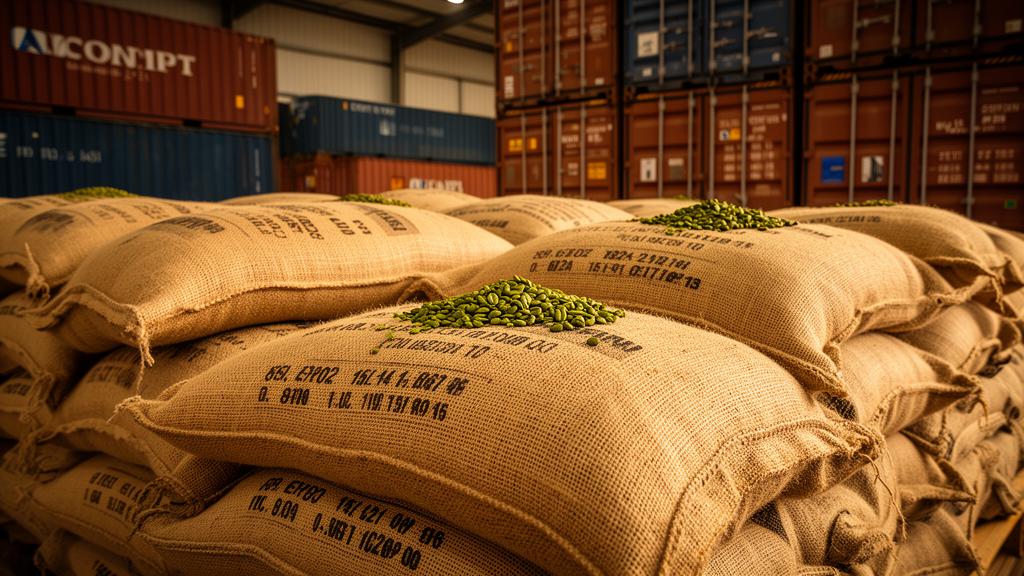
Green coffee is the processed, unroasted seed of the coffee cherry. It's the globally traded commodity — assessed for moisture content, bean density, screen size, and defect counts before export.
Green coffee refers to the processed, unroasted seed of the coffee cherry. After harvest, coffee cherries undergo processing to remove the fruit flesh, mucilage, and parchment layers, leaving the raw seed ready for export. This green coffee represents the traded commodity; roasting occurs in consuming countries or by domestic roasters prior to retail sale.
The green stage is significant because it determines the physical and chemical characteristics that roasters will later develop. Moisture content, bean density, screen size, and defect counts are assessed at the green stage. These factors inform pricing, roast profiles, and quality expectations.
Ethiopian green coffee differs from roasted coffee in appearance, stability, and handling requirements. Green beans display color variations from pale green to bluish-green depending on processing method and moisture content. Properly stored green coffee maintains quality for 12 to 24 months, whereas roasted coffee degrades within weeks of roasting.
Why Is Ethiopian Coffee Unique in Global Trade?
Ethiopian coffees are recognized as a distinct origin category due to their genetic uniqueness (heirloom varieties), terroir diversity, deep processing traditions, and unique institutional trading structure through the ECX.
Ethiopian green coffee beans occupy a distinct position in international markets. Buyers recognize Ethiopian coffees as a separate origin category, distinct from other African coffees or global Arabica production. This recognition reflects several factors:
- Genetic uniqueness: Ethiopian coffees derive from heirloom varieties not grown elsewhere, producing flavor profiles unavailable from other origins
- Terroir diversity: Growing regions within Ethiopia produce notably different cup characteristics, from the citrus brightness of Yirgacheffe to the fruit-forward intensity of natural-processed Guji
- Processing traditions: Both washed and natural processing methods have deep roots in Ethiopian practice, with regional preferences shaping the available supply
- Institutional structure: The Ethiopian Commodity Exchange and evolving traceability regulations create trading conditions specific to this origin
Specialty coffee buyers often treat Ethiopian coffees as essential to their offerings, sourcing specific regional lots to showcase the origin's diversity. Commercial roasters incorporate Ethiopian coffee into blends for its distinctive acidity and complexity.
What Are the Major Ethiopian Coffee Producing Regions?
Ethiopia's major coffee regions are Sidamo (stone fruit, floral), Yirgacheffe (citrus, tea-like), Guji (intense fruit), Harrar (wild, wine-like), Jimma/Limu (balanced), and emerging zones like Bench Maji and West Arsi.
Ethiopian coffee production concentrates in the southern and southwestern highlands, where altitude, rainfall, and temperature support Arabica cultivation. The primary producing regions include:
- Sidamo (Sidama): A large zone producing both washed and natural coffees with pronounced acidity and floral notes
- Yirgacheffe: Historically part of Sidamo, now recognized as a distinct origin known for delicate, tea-like washed coffees
- Guji: A zone producing coffees with intense fruit character, particularly in natural-processed lots
- Harrar: An eastern region known for dry-processed coffees with distinctive fruity, wine-like profiles
- Jimma and Limu: Western regions producing balanced, lower-acid coffees often used in blends
- Bench Maji and West Arsi: Emerging regions with increasing recognition in specialty markets
Detailed information on regional characteristics, altitude ranges, and terroir influence appears in the section on Ethiopian Coffee Growing Regions and Terroir.
Frequently Asked Questions
What are Ethiopian green coffee beans?
What grades of Ethiopian coffee does GreenBean export?
Which Ethiopian coffee regions do you source from?
What is the minimum order quantity?
How do I request wholesale pricing or samples?
GreenBean Coffee Editorial Team
Written by the export and quality control team at GreenBean Coffee, Addis Ababa. Our team has over 15 years of combined experience in Ethiopian specialty coffee sourcing, grading, and international trade logistics. All content is reviewed by licensed Q-graders and certified coffee professionals.
Last reviewed:
This page provides foundational context on Ethiopian green coffee. For detailed information on regional variations, consult the Regions section. Processing methods and variety information are covered in the Varieties section.
Ready to Source Premium Ethiopian Coffee?
Connect with our export team for samples, pricing, and availability. We ship Grade 1 & 2 Arabica to 40+ countries worldwide.