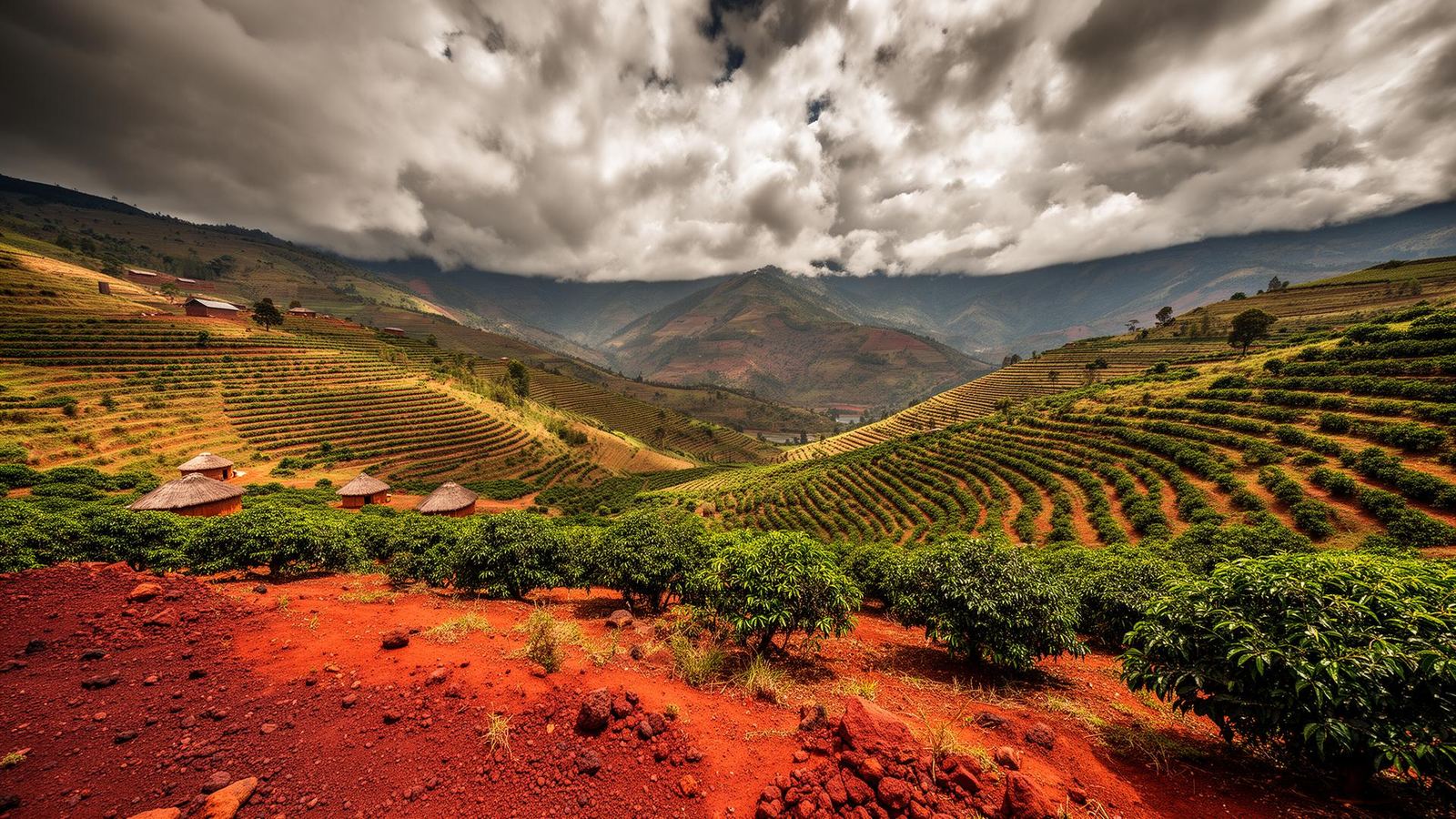
Ethiopia's major coffee regions are Yirgacheffe (floral, citrus), Sidamo (stone fruit, berry), Guji (complex, fruity), Harrar (bold, blueberry), and Limu (balanced, spicy). Each region's altitude, soil, and microclimate shape distinct green coffee characteristics.
Ethiopian coffee production spans multiple growing zones, each with distinct altitude ranges, soil compositions, microclimates, and varietal populations. These terroir factors shape the characteristics of green coffee before any processing or roasting occurs.
How Does Terroir Influence Ethiopian Green Coffee?
Terroir — altitude, climate, and soil — determines bean density, size, and chemical composition. Ethiopian coffee grows between 1,400 and 2,200 meters, with premium grades concentrated above 1,800 meters.
Terroir, a term borrowed from wine production, describes the combined effect of geography, climate, and soil on agricultural products. In coffee, terroir influences bean density, size, chemical composition, and ultimately the sensory characteristics that emerge during roasting.
Altitude functions as the primary terroir variable in Ethiopian coffee. Higher elevations produce cooler temperatures, slowing cherry maturation and increasing bean density. Dense beans roast more evenly and typically produce brighter acidity in the cup. Ethiopian coffee grows between approximately 1,400 and 2,200 meters above sea level, with premium grades concentrated above 1,800 meters.
Soil composition varies across Ethiopian growing regions. Volcanic soils predominate in many areas, providing mineral content that affects plant nutrition and bean chemistry. Red clay soils, common in parts of Sidamo and Yirgacheffe, retain moisture differently than the sandier soils found in Harrar.
What Makes Yirgacheffe Coffee Special?
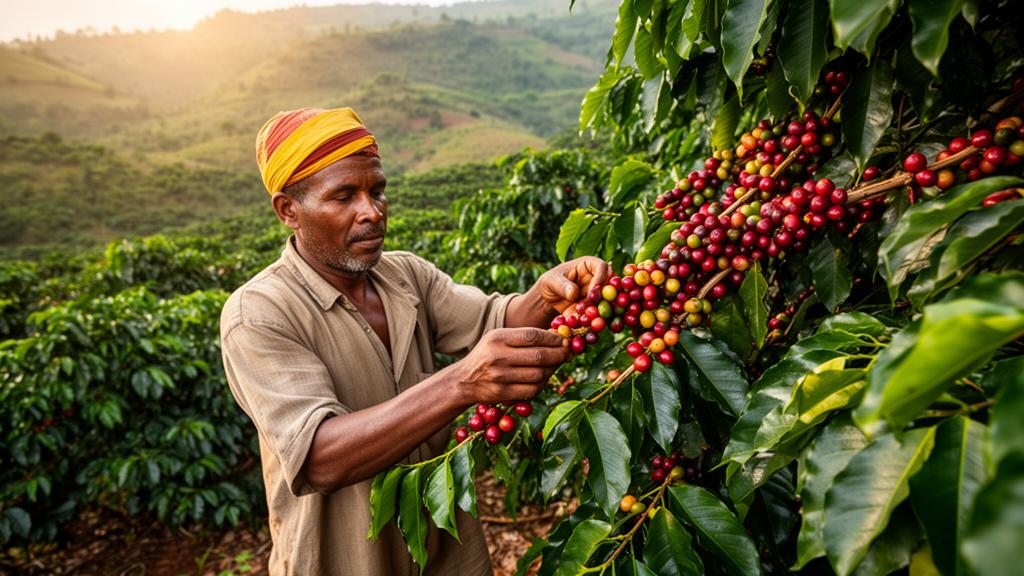
Yirgacheffe is Ethiopia's most recognized coffee origin. Growing at 1,700–2,200m in the Gedeo Zone, it produces coffees with exceptional clarity, floral aromatics, and citrus-toned acidity, primarily via washed processing.
Yirgacheffe represents Ethiopia's most internationally recognized coffee origin. Located within the Gedeo Zone of the Southern Nations region, Yirgacheffe produces coffees known for exceptional clarity, floral aromatics, and citrus-toned acidity. Most Yirgacheffe lots undergo washed processing, which emphasizes the region's delicate floral character.
Growing altitudes in Yirgacheffe range from 1,700 to 2,200 meters, with the highest elevations producing the most prized lots. The region receives adequate rainfall distributed across two rainy seasons, supporting consistent cherry development. Smallholder farms predominate, with most producers cultivating plots under one hectare.
Green coffee from Yirgacheffe typically displays medium screen sizes with high density. Washed lots exhibit bluish-green coloration, while naturals show slightly more yellow-brown tones. Premium lots achieve Grade 1 classification with minimal defects. For a deep dive on terroir, sub-regions, and buying, see our Yirgacheffe coffee guide.
What Defines Sidamo Coffee Characteristics?
Sidamo encompasses a large producing area in Ethiopia's southern highlands, historically including Yirgacheffe before the latter received separate designation. Altitude ranges from 1,400 to 2,200 meters, creating varied growing conditions.
Both washed and natural processing occur in Sidamo. The zone's washing stations produce clean, fruit-forward washed coffees, while natural-processed Sidamo exhibits intense berry and tropical fruit characteristics. For a deep dive on terroir, named sub-regions, and buying, see our Sidamo coffee guide.
Why Is Guji Considered an Emerging Premium Origin?
Guji Zone produces coffees with exceptional fruit intensity at 1,800–2,300m altitude. Natural-processed Guji coffees display intense blueberry, stone fruit, and fermented notes highly valued by specialty buyers.
Guji Zone has emerged as a premium Ethiopian origin, producing coffees with exceptional fruit intensity and complexity. Altitude ranges from 1,800 to 2,300 meters, with many premium lots sourced above 2,000 meters.
Natural-processed Guji coffees have attracted particular attention from specialty buyers, displaying intense blueberry, stone fruit, and fermented notes. Washed Guji also commands premium prices, offering floral complexity with cleaner fruit expression. For a deep dive on terroir, named sub-regions, and buying, see our Guji coffee guide.
What Makes Harrar Coffee Unique Among Ethiopian Origins?
Harrar represents Ethiopia's eastern coffee-producing region, distinct in geography, climate, and processing tradition from the southern highlands. Located near the historic walled city of Harar, this region produces almost exclusively natural-processed coffee.
The Harrar climate is drier and warmer than southern regions, with altitude ranging from 1,500 to 2,100 meters. Green coffee from Harrar displays brown and yellowish tones from natural processing, with less uniform sizing.
How Do Jimma and Limu Coffees Differ from Southern Origins?
Jimma and Limu represent major production areas in western Ethiopia, contributing significant volume to exports. These regions produce coffees with balanced, less aggressive acidity compared to southern zone origins, making them suitable for blending.
Washed Limu coffees exhibit clean, mild profiles with wine-like undertones. Jimma production includes both specialty-grade washed lots and commercial natural-processed coffee.
What Is Bench Maji Wild Coffee?
Bench Maji Zone lies in Ethiopia's far southwest, containing some of Ethiopia's remaining wild coffee forests where coffee grows naturally without formal cultivation. Altitude ranges from 1,500 to 2,000 meters in shade-forest environments.
Why Is West Arsi Gaining Recognition in Specialty Markets?
West Arsi represents an emerging specialty origin within the Oromia region. Growing altitudes reach 2,200 meters, producing dense beans with bright acidity. Green coffee from West Arsi displays characteristics similar to high-altitude Sidamo and Guji lots.
What Should Green Coffee Buyers Know About Ethiopian Regions?
Regional identification provides predictive quality info, but individual lot evaluation is essential. Higher altitude correlates with denser beans; washed coffees sort more uniformly; eastern regions (Harrar) differ significantly from southern zones.
Regional identification provides buyers with predictive information about green coffee characteristics. However, variation exists within regions. The following generalizations apply:
- Higher altitude within any region correlates with denser beans and brighter acidity
- Washed coffees display more uniform appearance and cleaner sorting than naturals
- Eastern regions (Harrar) produce different visual and flavor characteristics than southern zones
- Emerging regions may offer value but carry higher variability risk
Buyers should evaluate individual lot samples rather than relying solely on regional designations. For a complete overview of the buying process, see our Ethiopian Coffee Sourcing Guide. Understanding processing methods and grading standards is also essential when comparing regional lots.
Frequently Asked Questions
GreenBean Coffee Editorial Team
Written by the export and quality control team at GreenBean Coffee, Addis Ababa. Our team has over 15 years of combined experience in Ethiopian specialty coffee sourcing, grading, and international trade logistics. All content is reviewed by licensed Q-graders and certified coffee professionals.
Last reviewed:
Ready to Source Premium Ethiopian Coffee?
Connect with our export team for samples, pricing, and availability. We ship Grade 1 & 2 Arabica to 40+ countries worldwide.