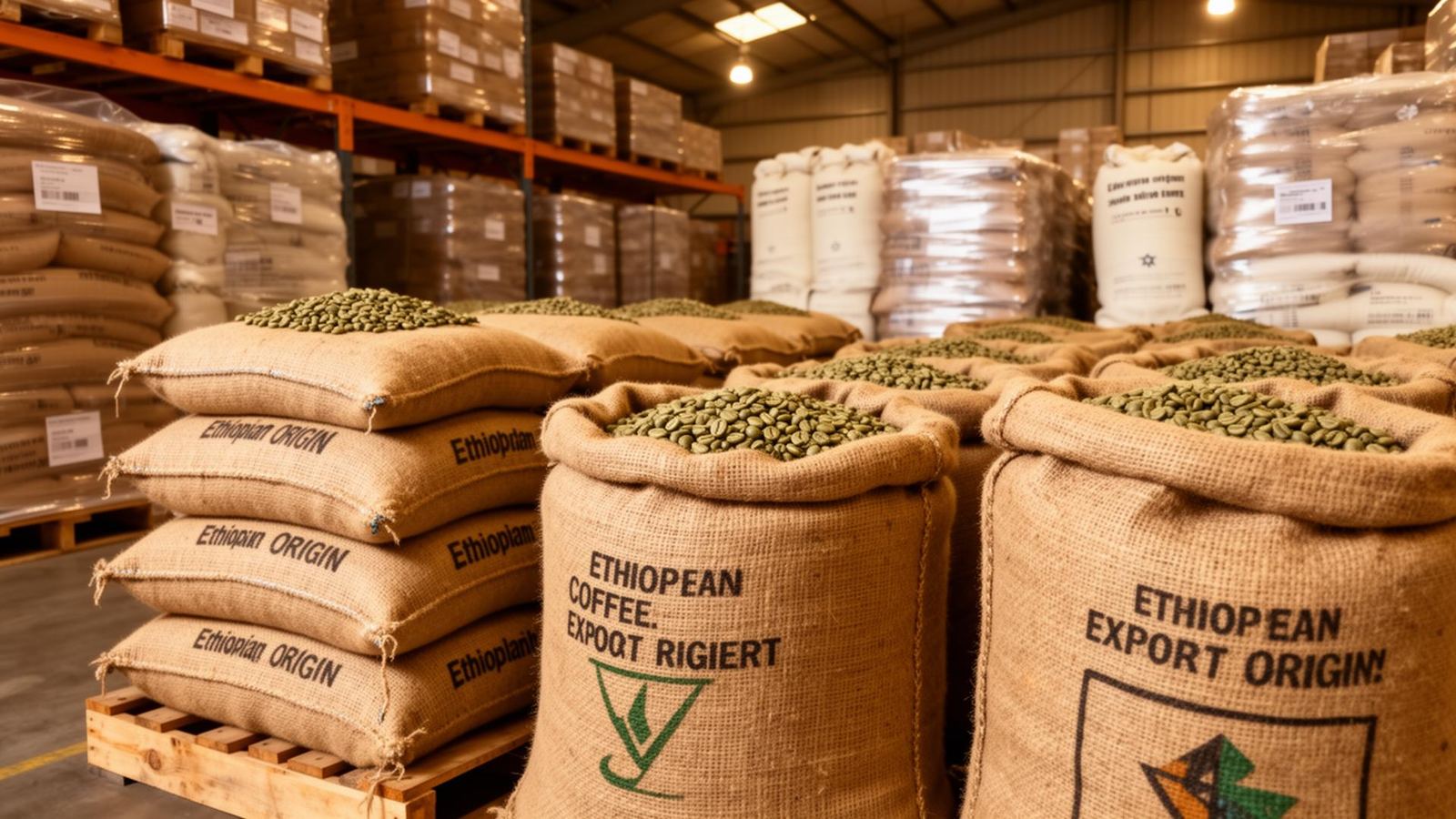
Green Ethiopian coffee is classified under HTS 0901.11.00. Beyond the standard commodity classification, US importers need an FDA Prior Notice filing, a USDA APHIS phytosanitary certificate (and sometimes an import permit), and should confirm current tariff status directly with a customs broker before finalizing costs — Ethiopia's US trade status has changed more than once recently.
Our Trade & Export Logistics guide covers shipping, storage, and documentation that apply to any destination. This page covers what's specific to bringing green coffee into the United States — customs classification, food-safety filings, and the agencies actually involved, based on current, publicly available US import guidance.
What Does Importing Ethiopian Coffee to the USA Involve?
Three US agencies are typically involved in a green coffee shipment: US Customs and Border Protection (CBP) for tariff classification and entry, the Food and Drug Administration (FDA) for food-safety notification, and the US Department of Agriculture's Animal and Plant Health Inspection Service (USDA APHIS) for plant-pest risk. None of this is unique to Ethiopian coffee specifically — it applies to green coffee from any origin — but the country-of-origin tariff status is Ethiopia-specific and worth checking separately from the commodity classification below.
How Is Green Coffee Classified for US Customs?
Unroasted, non-decaffeinated green coffee falls under Harmonized Tariff Schedule (HTS) code 0901.11.00. This is a stable, standard classification used across origins — it's not specific to Ethiopia. Confirm the exact subheading applies to your specific shipment with a licensed customs broker, since packaging and processing details can occasionally affect classification.
What Duties or Tariffs Apply to Ethiopian Coffee?
This is the part of importing Ethiopian coffee that changes the most, and where we'd rather be honest about the limits of what we can tell you than state a number that's wrong by the time you read this. As of this page's last review, the Office of the United States Trade Representative states directly that Ethiopia is not eligible for AGOA (the African Growth and Opportunity Act) this year — the preferential trade program that has historically given many African exports duty-free access. Beyond the standard commodity HTS classification above, country-specific tariff measures affecting Ethiopian goods have applied and changed more than once in the recent past.
Don't budget from a number you read online — including this one
Confirm the current effective duty rate for Ethiopian-origin coffee directly with US Customs and Border Protection or a licensed customs broker before finalizing landed-cost estimates. Trade policy affecting Ethiopia specifically has been genuinely volatile — a rate that was accurate last quarter may not be accurate now.
What Does the FDA Require?
The FDA requires a Prior Notice filing for any food shipment, including green coffee, before it arrives in the US. This is an electronic notification submitted ahead of arrival, within a timeframe that depends on the mode of transport — typically handled by your customs broker or freight forwarder rather than filed directly by the buyer.
What Does USDA APHIS Require?
USDA's Animal and Plant Health Inspection Service (APHIS) screens agricultural imports for plant-pest risk — for coffee, this includes pests like the coffee berry borer. A phytosanitary certificate issued by Ethiopia's Ministry of Agriculture should accompany the shipment. Depending on the specifics of your shipment, an import permit application (USDA PPQ Form 587) may also be required in advance. Requirements here can vary — confirm with APHIS or your customs broker rather than assuming either way.
What Documents Does a US Import Need?
In addition to the general export documentation covered in our Trade & Export Logistics guide (Certificate of Origin, Bill of Lading, commercial invoice, packing list), a US-bound shipment specifically needs:
- Phytosanitary certificate from Ethiopia's Ministry of Agriculture
- FDA Prior Notice confirmation, filed ahead of arrival
- USDA PPQ 587 import permit, if required for your specific shipment
- ICO (International Coffee Organization) certificate
How Long Does the Process Take?
From the Port of Djibouti, ocean transit to the US typically takes 4-5 weeks — see our full shipping timelines by destination. Add time on top of that for FDA/USDA document review and any CBP examination on arrival; well-prepared documentation filed on time is what keeps that step from adding delay.
Do I Need a Customs Broker?
Not legally required for most commercial shipments, but strongly advisable. A licensed US customs broker handles HTS classification, FDA Prior Notice filing, and coordination with CBP and APHIS — and, importantly for the section above, can tell you the actual current duty rate for your specific shipment rather than a general figure. For a first import, the cost of a broker is generally worth avoiding a hold at port.
Ready to source? Our wholesale inquiry form is the place to start — mention that you're importing to the US and we'll factor that into sample and documentation planning from the outset.
Frequently Asked Questions
What HTS code applies to green Ethiopian coffee imports?
Do I need an import permit to bring green coffee into the USA?
Are there special tariffs on Ethiopian goods right now?
What is FDA Prior Notice and who files it?
How long does shipping from Ethiopia to the US typically take?
GreenBean Coffee Editorial Team
Written by the export and quality control team at GreenBean Coffee, Addis Ababa. Our team has over 15 years of combined experience in Ethiopian specialty coffee sourcing, grading, and international trade logistics. All content is reviewed by licensed Q-graders and certified coffee professionals.
Last reviewed:
Ready to Source Premium Ethiopian Coffee?
Connect with our export team for samples, pricing, and availability. We ship Grade 1 & 2 Arabica to 40+ countries worldwide.