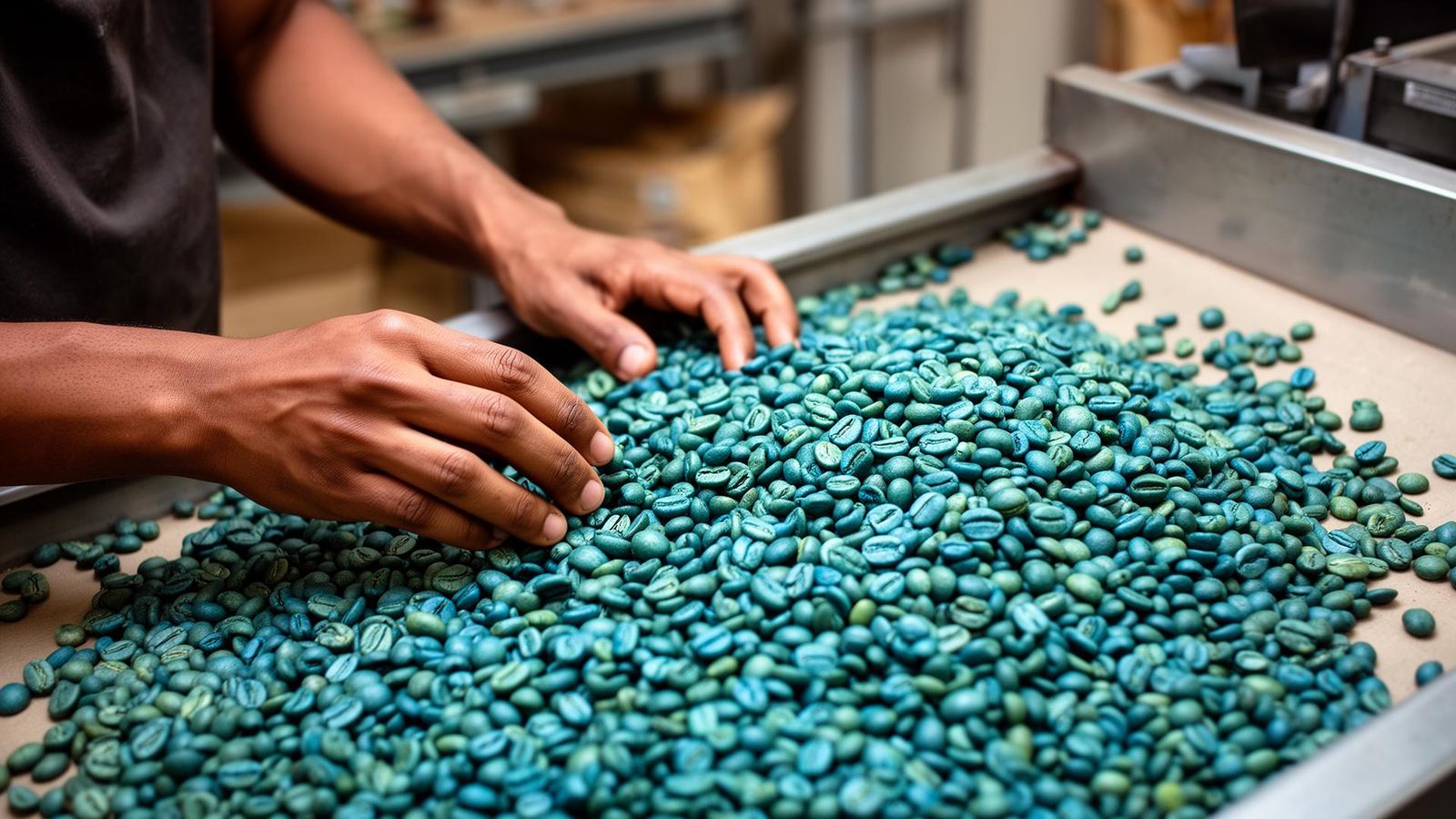
Grade 1 = 0–3 defects/300g (specialty). Grade 2 = 4–12 defects (high commercial). Grade 3–5 = increasing defects (commercial). Natural coffees have higher tolerances at each grade level.
Part of our Complete Ethiopian Coffee Sourcing Guide. For the official institutional context, see Ethiopian coffee grading and ECX standards.
What Does Ethiopian Coffee Grade Mean?
Ethiopian coffee grades indicate physical quality based primarily on defect counts in a 300-gram green sample, combined with screen size, moisture content, and cup evaluation. The Ethiopian Coffee and Tea Authority (formerly through the Ethiopian Commodity Exchange) assigns a grade from 1 (highest) to 5 (lowest export grade), and that grade follows the lot through every export document, contract, and price negotiation.
Grade is not a marketing term in Ethiopia — it is a regulated specification. Every export lot is sampled by certified graders before it leaves the country, and the grade printed on the ICO certificate is what customs authorities, insurers, and arbitration panels treat as the legal description of the coffee.
- Grades measure physical quality, not flavor profile
- Different tolerances apply to washed vs. natural coffees
- Cup quality evaluation also influences final grade
- Grades establish pricing benchmarks and contract specifications
- Grade is printed on official export documents and is legally binding
Ethiopian Coffee Grades 1-5 Explained
Washed Coffee Grades
- Grade 1: 0-3 defects / 300g — Exceptional specialty
- Grade 2: 4-12 defects / 300g — High specialty
- Grade 3: 13-25 defects / 300g — Commercial specialty
- Grade 4: 26-45 defects / 300g — Standard commercial
- Grade 5: 46-90 defects / 300g — Lower commercial
Natural Coffee Grades
- Grade 1: 0-15 defects / 300g — Exceptional natural
- Grade 2: 16-30 defects / 300g — Specialty natural
- Grade 3: 31-60 defects / 300g — Commercial specialty
- Grade 4: 61-120 defects / 300g — Standard commercial
- Grade 5: 121-180 defects / 300g — Lower commercial
Grade 1 vs Grade 2 vs Grade 3 — Side-by-Side Comparison
Grade 1 (0–3 defects, 85+ cup) is reserved for top single-origin lots. Grade 2 (4–12 defects, 80–84 cup) is the workhorse of specialty Ethiopian coffee. Grade 3 (13–25 defects, 76–80 cup) bridges specialty and commercial use.
| Attribute | Grade 1 | Grade 2 | Grade 3 |
|---|---|---|---|
| Washed defects / 300g | 0–3 | 4–12 | 13–25 |
| Natural defects / 300g | 0–15 | 16–30 | 31–60 |
| SCA cup score | 85+ | 80–84 | 76–80 |
| Typical screen size | 15–18 | 14–17 | 14–16 |
| Moisture range | 10.0–11.5% | 9.5–11.5% | 9.5–11.5% |
| Primary defect ceiling | 0 | Trace permitted | Limited |
| Typical price premium vs. C-market | +$1.50–3.00/lb | +$0.60–1.50/lb | +$0.20–0.60/lb |
| Best use | Top single-origin, competition lots | Single-origin specialty menu | Specialty blends, value single-origin |
| Annual share of crop (approx.) | ~5% | ~25% | ~30% |
The jump from Grade 2 to Grade 1 is the steepest in the system. The physical defect difference is small (a handful of beans in 300 grams), but the cup difference is meaningful: Grade 1 lots preserve the delicate jasmine, bergamot and stone-fruit notes that make Ethiopian coffee distinctive, while a single primary defect at Grade 2 level can introduce a faint papery or fermenty note that masks them.
How Are Coffee Defects Counted?
Ethiopian graders follow the SCA defect classification system, adapted for Ethiopian conditions. Each defect type carries a weighting: one primary defect counts as a full defect, while it takes multiple secondary defects to equal one full defect. The 300g sample is hand-sorted on a black tray under daylight-balanced lighting.
Primary Defects (1 full defect each)
- Full black beans: Over-fermentation or disease — major cup contamination
- Full sour beans: Fermentation issues — introduces vinegar/phenolic notes
- Fungus-damaged beans: Mold affecting safety and flavor
- Foreign matter: Stones, sticks, leaves, husks
- Severe insect damage: Three or more borer holes per bean
Secondary Defects (5 = 1 full defect)
- Partial black/sour: Less than half the bean affected
- Light insect damage: One or two borer holes
- Broken beans, chips and cuts: Mechanical processing damage
- Quakers: Underdeveloped beans that fail to roast
- Hull/husk fragments: Incomplete dehulling
- Withered beans: Drought-stressed or shrivelled
How Does Screen Size Affect Ethiopian Coffee Grading?
Screen size measures bean diameter in 1/64ths of an inch — a screen 16 bean passes through a 16/64" (6.35mm) hole. Ethiopian heirloom varieties produce naturally smaller beans than Brazilian or Colombian cultivars, so screen 14–17 is the norm rather than a sign of lower quality. Lots are screened over a stack of perforated trays, and the percentage retained on each screen is recorded on the grading certificate.
Uniformity matters more than absolute size: a lot that's 90% screen 15 will roast more evenly than one split 50/50 between screens 14 and 18, even if the average is the same. Roasters working with Ethiopian coffee should expect smaller, more variable beans and adjust roast profiles for shorter heat-penetration time.
Moisture, Density and Water Activity
Three physical measurements sit alongside defect count in every Ethiopian grading certificate:
- Moisture content (9.5–11.5%): Above 11.5% risks mold during transit; below 9.5% indicates over-drying and brittle beans that lose aromatic compounds quickly.
- Bulk density (typically 700–780 g/L for Ethiopian highland coffee): Higher density usually correlates with high-altitude growth and longer cherry maturation — both positive specialty indicators.
- Water activity (target < 0.65 aw): A separate measurement from moisture, water activity predicts shelf life. Grade 1 lots increasingly carry aw measurements alongside the traditional metrics.
How Does Cup Quality Factor Into Grading?
Official Ethiopian grading includes a cupping evaluation by certified Q-graders, scoring cleanliness, sweetness, acidity, body, flavor, aftertaste, balance and uniformity on the SCA 100-point scale. A lot that meets Grade 1 defect standards but cups below 80 may be downgraded to Grade 2; conversely, an exceptional cup score will not promote a defect-heavy lot to Grade 1.
This dual physical-plus-cup evaluation is what distinguishes Ethiopian grading from origins that grade on physical defects alone. It also explains why two Grade 2 lots from different cooperatives can carry meaningfully different price tags.
Does Higher Grade Mean Better Tasting Coffee?
No. Grade measures physical quality, not flavor. A Grade 2 Yirgacheffe (floral, citrus) tastes completely different from a Grade 2 Guji (berry, wine-like). Always cup samples regardless of grade.
Region, altitude, variety and processing method determine flavor; grade determines defect tolerance. A clean, well-processed Grade 3 from a high-altitude cooperative can out-cup a Grade 1 from a lower-altitude region with weaker terroir. Use grade to screen for safety and consistency, then use the cupping table to choose for flavor.
How Do Grades Affect Ethiopian Coffee Pricing?
Ethiopian green coffee is priced as a premium over the ICE C-market futures contract, plus an origin differential, plus a grade differential. Approximate 2026 differentials:
- Grade 1 washed Yirgacheffe: C + $2.00 to $3.00/lb
- Grade 2 washed Sidamo or Limu: C + $0.80 to $1.40/lb
- Grade 3 washed: C + $0.30 to $0.60/lb
- Grade 1 natural Guji: C + $2.50 to $3.50/lb (often higher than washed)
- Grade 4–5: Usually traded at or near C-market for blending
Differentials shift with crop size, currency moves and demand from end markets. Direct-trade cooperative lots can carry an additional $0.50–1.50/lb premium for traceability and farmer-share guarantees.
What Do Grades Mean for Buyers?
- Grades 1-2: Single-origin specialty offerings at premium prices, competition lots, micro-roasters' flagship offerings.
- Grade 3: Specialty blends, value single-origins, subscription boxes, espresso bases.
- Grades 4-5: Commercial blending, instant coffee production, foodservice volume.
Always request pre-shipment samples regardless of grade. To understand how the underlying processing method influences defect tolerances, and how harvest timing affects what's available at each grade level, see our companion guides.
How to Verify a Grade Claim Before You Wire Payment
Grade fraud is rare but not unheard of, particularly outside the certified cooperative channel. A short verification protocol protects both sides of the trade:
- Request the official grading certificate from the Ethiopian Coffee and Tea Authority or the ECX warehouse receipt, with lot number, grade, moisture, screen size and defect count.
- Pull a 300g pre-shipment sample from the actual lot (not a reference sample) and re-grade it on your own bench or via a third-party Q-grader.
- Compare cup scores against an independent SCA score sheet — Grade 1 should cup 85+, Grade 2 should cup 80+.
- Inspect arrival samples on container landing for moisture drift and any in-transit defects (mold, sour, baggy).
- Document any deviation in writing within the contract's claim window (typically 14–30 days from arrival) to preserve arbitration rights.
For buyers new to Ethiopian sourcing, our sourcing guide walks through the full contract-to-arrival workflow, and we can issue grade-verified samples against any active lot in our offer list.
Frequently Asked Questions
GreenBean Coffee Editorial Team
Written by the export and quality control team at GreenBean Coffee, Addis Ababa. Our team has over 15 years of combined experience in Ethiopian specialty coffee sourcing, grading, and international trade logistics. All content is reviewed by licensed Q-graders and certified coffee professionals.
Last reviewed:
Ready to Source Premium Ethiopian Coffee?
Connect with our export team for samples, pricing, and availability. We ship Grade 1 & 2 Arabica to 40+ countries worldwide.