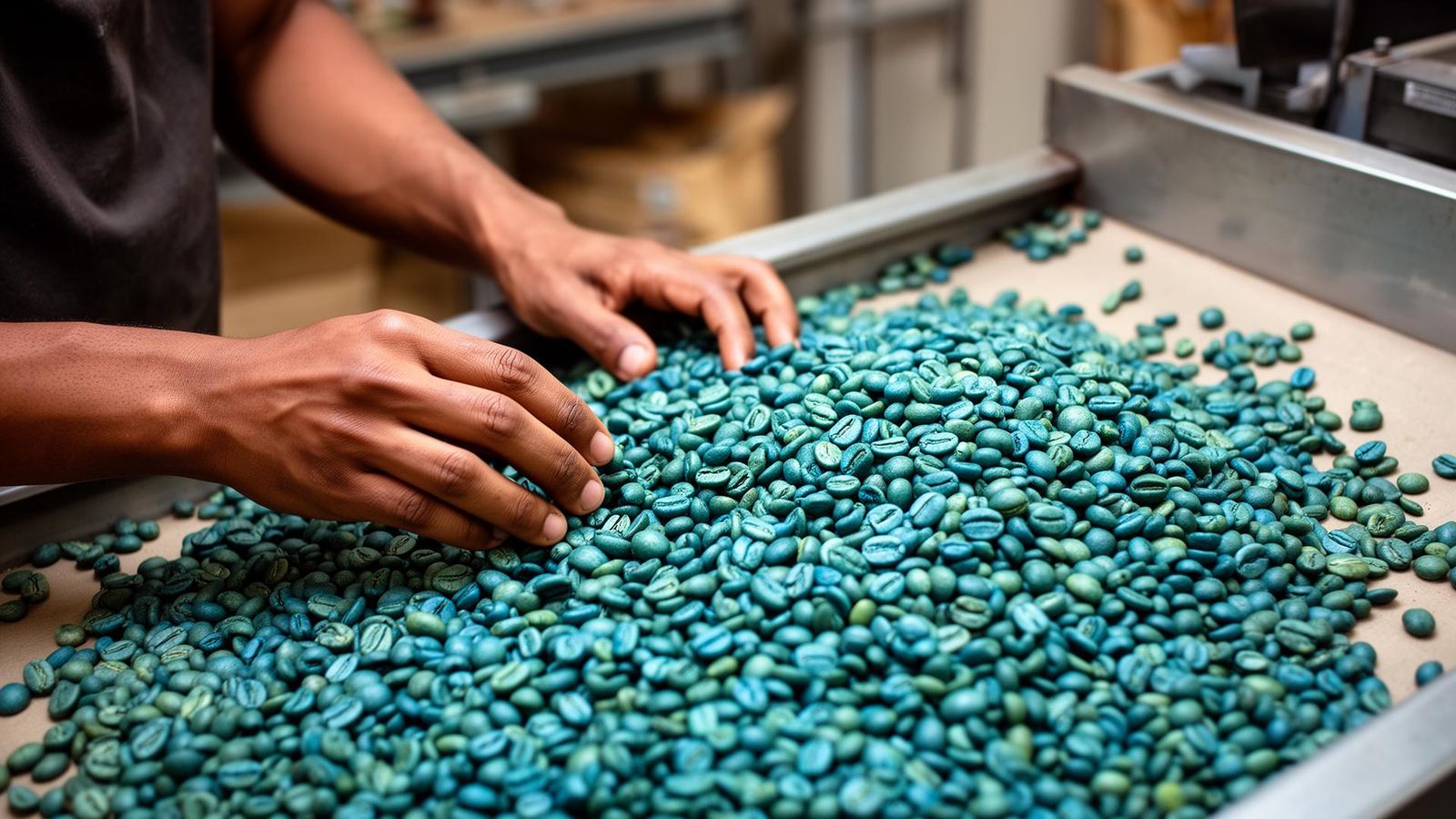
Grade 1 Ethiopian coffee has 0–3 defects per 300g (washed) and represents specialty quality scoring 80+ on the SCA scale. The grading system ranges from 1 (highest) to 5, with different defect tolerances for washed vs. natural processing.
Ethiopian coffee grading and export operate through institutional structures that differ from other coffee origins. The Ethiopian Commodity Exchange, government quality standards, and evolving traceability regulations shape how green coffee moves from producers to international buyers.
What Is the Ethiopian Commodity Exchange (ECX)?
The Ethiopian Commodity Exchange, established in 2008, created a centralized trading platform for agricultural commodities including coffee. Under the original ECX system, most Ethiopian coffee flowed through exchange warehouses where lots were graded, stored, and traded through open auction. For a complete overview of how to navigate this system as a buyer, see our Ethiopian Coffee Sourcing Guide.
The ECX model aimed to improve market efficiency, price discovery, and payment security for farmers. Under ECX trading, traceability to specific farms or cooperatives was largely eliminated.
How Does Direct Trade and Cooperative Export Work?
Since 2017, cooperatives, unions, and certified exporters can sell directly to international buyers without passing through the ECX. This enables farm-level traceability for specialty markets while ECX handles commodity volumes.
Regulatory changes beginning in 2017 expanded alternatives to ECX trading. The current system permits multiple trading channels:
- ECX auction: Standard commodity trading for aggregated regional lots
- Cooperative direct sale: Primary cooperatives and unions may export directly
- Vertical integration: Some exporters own or partner with washing stations
- Forward contracting: Agreements for future delivery enable relationship-based trading
How Is Ethiopian Coffee Graded from 1 to 5?
Ethiopian coffee grades range from 1 to 5 for export. Grade 1 washed: 0–3 defects/300g. Grade 1 natural: 0–15 defects/300g. Natural coffees receive higher defect tolerances because drying inherently produces more variation.
Washed Coffee Grade Standards
- Grade 1: 0-3 defects per 300g — Specialty, exceptional cup
- Grade 2: 4-12 defects per 300g — Specialty, very good cup
- Grade 3: 13-25 defects per 300g — Commercial specialty
- Grade 4: 26-45 defects per 300g — Standard commercial
- Grade 5: 46-90 defects per 300g — Lower commercial
Natural Coffee Grade Standards
- Grade 1: 0-15 defects per 300g — Exceptional natural
- Grade 2: 16-30 defects per 300g — Specialty natural
- Grade 3: 31-60 defects per 300g — Commercial specialty natural
- Grade 4: 61-120 defects per 300g — Standard commercial natural
- Grade 5: 121-180 defects per 300g — Lower commercial natural
What Criteria Determine Ethiopian Coffee Grades?
Export Moisture Requirements
Export-grade coffee must contain between 9.5% and 11.5% moisture. Coffee exceeding these limits faces rejection or discount.
Defect Counting
Graders evaluate 300-gram samples for primary and secondary defects. Primary defects carry heavier weighting than secondary defects.
Screen Size
Typical Ethiopian coffee screens at 15-17, with premium lots sometimes reaching 18-19.
Cup Quality
Official grading includes cupping evaluation. High physical grades with poor cup quality may be downgraded; exceptional cup performance can offset minor physical deficiencies.
How Has Ethiopian Coffee Traceability Improved?
- Cooperative and union exports maintain member farmer records
- Integrated exporters document processing station sources
- Digital platforms enable lot tracking from cherry delivery through export
- Third-party certifications require chain of custody documentation
What Are Common Misconceptions About Ethiopian Grades?
Does Grade Equal Flavor Profile?
A Grade 2 coffee is not inherently "better tasting" than a Grade 3. Grades measure physical quality and defect counts. Two coffees of identical grades from different regions will taste quite different.
How Available Is Grade 1 Coffee?
Grade 1 Ethiopian coffee exists but comprises a small percentage of production. Marketing claims of Grade 1 should be verified through documentation and sample evaluation.
Can Natural and Washed Grades Be Compared?
A Grade 2 natural is not physically identical to a Grade 2 washed; they represent equivalent quality tiers within their categories.
How Should Buyers Interpret and Use Grade Information?
Grades 1–2 are suitable for single-origin specialty offerings at premium prices. Grade 3 works for specialty blends. Grades 4–5 serve commercial blending. Always request pre-shipment samples regardless of grade.
- Grades 1-2: Expected to perform as single-origin specialty offerings
- Grade 3: Suitable for specialty blends or value single-origins
- Grades 4-5: Commercial quality for blending
Understanding how processing methods interact with grading is essential — a Grade 2 natural has different defect tolerances than a Grade 2 washed. For regional quality variations, see our growing regions guide. Ready to buy? Check trade logistics and shipping timelines.
Frequently Asked Questions
GreenBean Coffee Editorial Team
Written by the export and quality control team at GreenBean Coffee, Addis Ababa. Our team has over 15 years of combined experience in Ethiopian specialty coffee sourcing, grading, and international trade logistics. All content is reviewed by licensed Q-graders and certified coffee professionals.
Last reviewed:
Ready to Source Premium Ethiopian Coffee?
Connect with our export team for samples, pricing, and availability. We ship Grade 1 & 2 Arabica to 40+ countries worldwide.