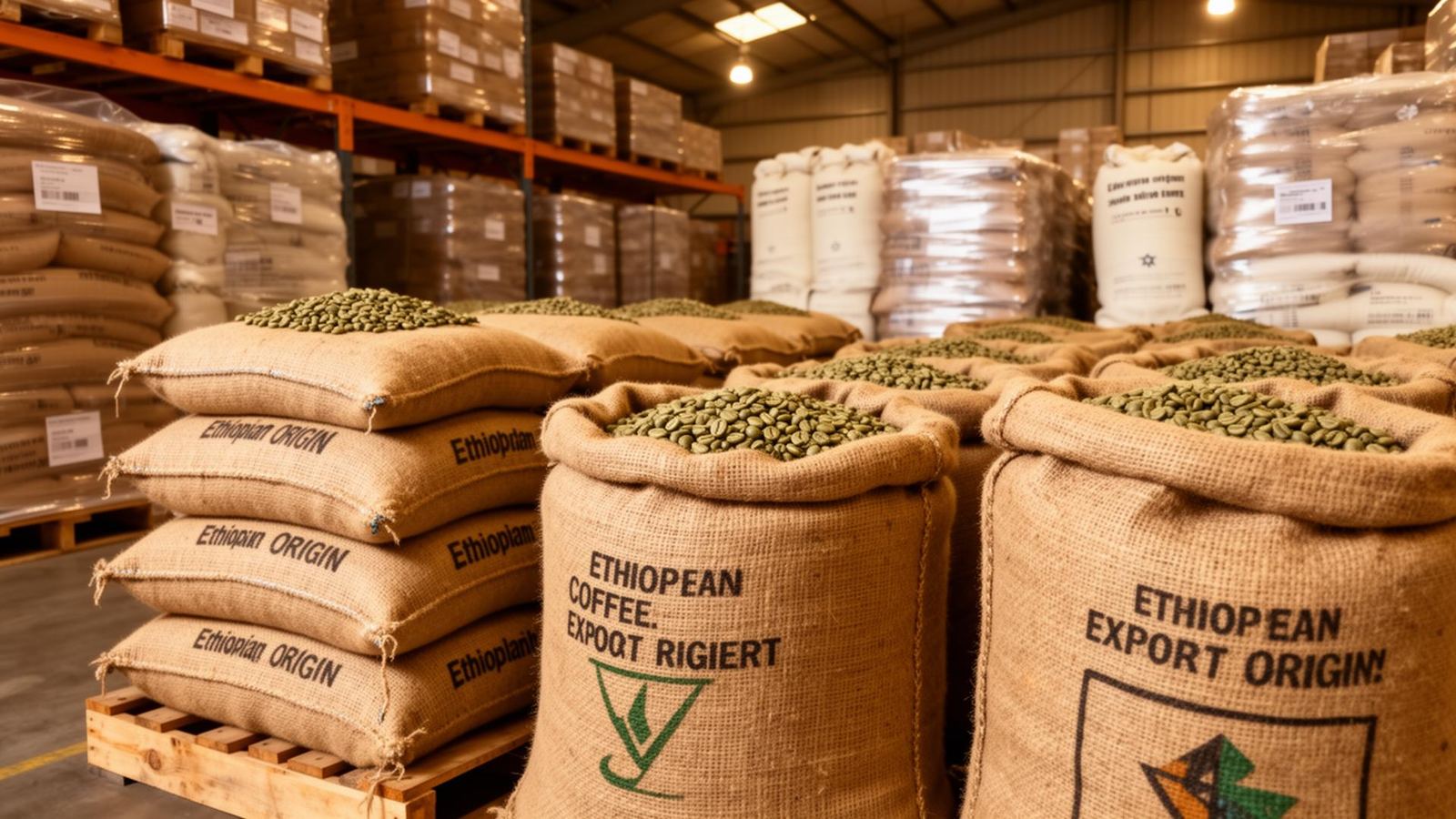
Shipping Ethiopian coffee to Europe takes 3–4 weeks, to the USA 4–5 weeks, and to Asia 4–6 weeks. Minimum order is one 20ft container (~19,200 kg). Green coffee maintains quality for 12–18 months when stored at 15–25°C and 50–70% humidity.
What Are Proper Green Coffee Storage Conditions?
Optimal storage: 15–25°C (59–77°F), 50–70% relative humidity, away from light and odors. GrainPro or hermetic bags recommended. Proper storage extends usable shelf life to 12–24 months.
Optimal Storage Conditions
Temperature: 15–25°C (59–77°F) • Humidity: 50–70% relative • Away from direct light and odors • Sealed GrainPro or hermetic bags recommended
Green coffee quality degrades over time through moisture absorption, lipid oxidation, and flavor compound volatilization. Proper storage extends usable shelf life and preserves characteristics.
Humidity Protection
Relative humidity should remain between 50% and 70%. Ethiopian coffees, particularly naturals, may be susceptible to moisture pickup if stored without climate control.
Odor Protection
Green coffee absorbs ambient odors readily. Storage areas should be free from chemicals, petroleum products, or other aromatic materials. Contamination cannot be reversed.
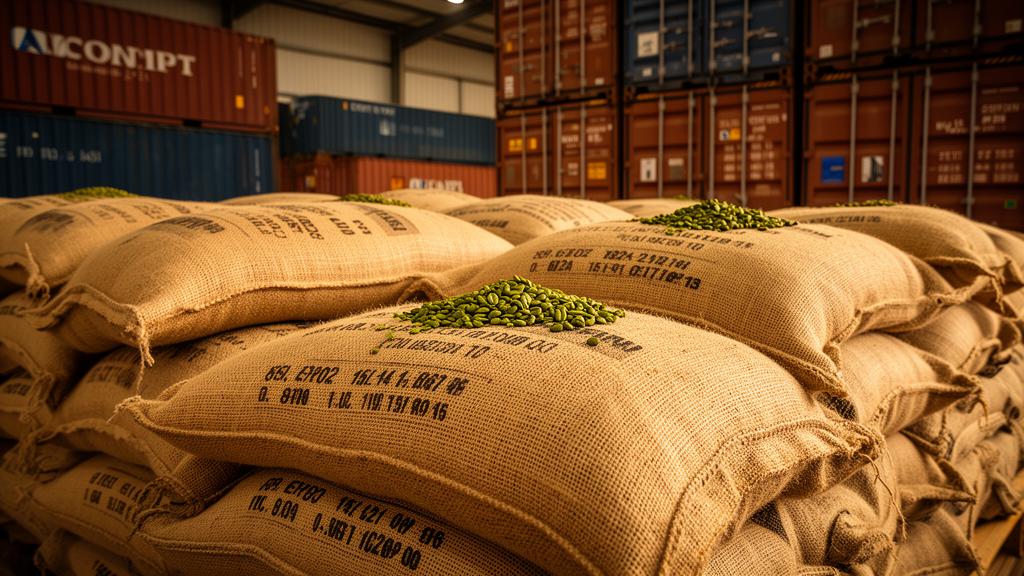
How Long Does Ethiopian Green Coffee Maintain Quality?
Ethiopian green coffee, when properly stored, maintains quality for 12 to 18 months from harvest. Premium lots from high-altitude regions may retain peak characteristics for 18 to 24 months.
Fresh crop Ethiopian coffee typically arrives in consuming countries between March and August, depending on region and processing time.
How Does Ethiopian Coffee Export and Logistics Work?
Origin Processing Timeline
Ethiopian coffee harvest occurs primarily between October and January. Washed processing adds 2-4 weeks; natural processing requires 3-5 weeks of drying time.
Export Documentation
Ethiopian coffee export requires contracts registered with the Coffee and Tea Authority, quality certificates, phytosanitary certificates, and export permits. All lots are classified under the Ethiopian grading system before export clearance.
Shipping from Djibouti
Ethiopian coffee exports primarily through the Port of Djibouti, approximately 900 kilometers from Addis Ababa. Trucking to port takes 2-4 days.
Ocean Transit Times from Djibouti
- Europe: 14-25 days
- North America East: 25-35 days
- North America West: 35-45 days (via Suez)
- Asia: 10-18 days
What Shipping Methods and Risks Should Buyers Understand?
Container Types
- Standard dry containers: Most common; adequate but vulnerable to temperature differentials
- Ventilated containers: Improved airflow reduces condensation risk
- Lined containers: Kraft paper or foil lining provides additional moisture protection
Packaging Options
- Jute bags (60 kg): Traditional; breathable but limited moisture protection
- GrainPro inside jute: Hermetic inner lining preserves moisture content
- Bulk container liners: For large volume movements
Transit Risks
- Container sweat: Temperature differentials cause condensation
- Extended transit: Delays prolong degradation exposure
- Physical damage: Rough handling can damage bags
- Contamination: Previous cargo odors may affect coffee
What Should Buyers Check Before Contracting Ethiopian Coffee?
Sample Evaluation
- Request pre-shipment samples representing the actual contracted lot
- Evaluate moisture content independently
- Conduct physical grading to verify defect counts
- Cup samples to confirm flavor quality
Contract Terms
- Specify grade, screen size, moisture content, and defect tolerances
- Define packaging requirements and container specifications
- Establish sampling and approval protocols
- Clarify dispute resolution procedures
Should Buyers Choose Spot Purchases or Forward Contracts?
Spot buying offers ability to evaluate actual samples, shorter delivery timelines, and price certainty. Forward contracts provide secured access to specific producers, price negotiation before harvest, and relationship building.
What Practical Factors Affect International Buyers?
Minimum order: one 20ft container (~18–20 metric tons). Payment: letters of credit or advance payment. Import regulations vary by country. Long-term exporter relationships provide priority access and better pricing.
Minimum Order Quantities
Container economics favor full container loads (approximately 18-20 metric tons). Smaller quantities may be available through consolidators at premium pricing. For optimal timing of orders, consult our seasonal buying calendar.
Payment Terms
Ethiopian exports typically require letters of credit or advance payment. New buyers should expect stricter terms until establishing track records.
Relationship Development
Consistent buyers receive priority access to limited lots, better pricing, and more responsive communication. Origin visits strengthen relationships. See our sourcing guide for detailed advice on building supplier partnerships. To understand regional quality differences before purchasing, review our growing regions and varieties & processing pages.
Frequently Asked Questions
GreenBean Coffee Editorial Team
Written by the export and quality control team at GreenBean Coffee, Addis Ababa. Our team has over 15 years of combined experience in Ethiopian specialty coffee sourcing, grading, and international trade logistics. All content is reviewed by licensed Q-graders and certified coffee professionals.
Last reviewed:
Ready to Source Premium Ethiopian Coffee?
Connect with our export team for samples, pricing, and availability. We ship Grade 1 & 2 Arabica to 40+ countries worldwide.