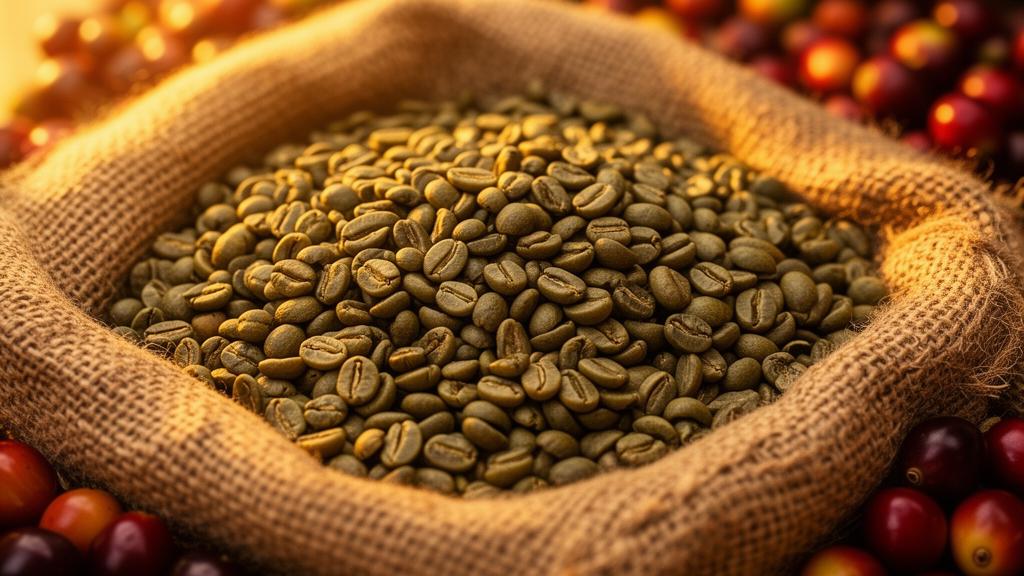
Green coffee beans are raw, unroasted coffee seeds — the starting point of every cup of coffee. They are pale green, shelf-stable for up to two years, and give roasters full control over flavour development. Buying green lets you roast fresher, save money, and connect directly with coffee origins.
Picture this: you're holding a small paper bag of coffee beans a friend brought back from their travels. The beans are pale, almost jade-green, and smell nothing like the rich, dark roast in your cabinet. "These are green coffee beans," your friend says. "You roast them yourself." Sound familiar? This guide will walk you through everything you need to know.
What Are Green Coffee Beans?
Green coffee beans are simply raw, unroasted coffee seeds. Every coffee bean you've ever brewed started life as a green bean — the roasting process is what transforms them into the dark, aromatic beans you grind each morning.
The coffee plant (Coffea arabica or Coffea canephora, better known as Robusta) produces a red or yellow fruit called a coffee cherry. Inside each cherry are two seeds, face-to-face. These seeds are processed — either washed, naturally dried, or honey-processed — and the result is what the specialty coffee world calls a "green bean."
Green beans are the starting point of the entire coffee supply chain. Farmers harvest them, exporters ship them, and roasters transform them. By buying green coffee beans directly, you skip straight to the roaster's chair — and that's a remarkably powerful position to be in.
How Do Green Coffee Beans Differ from Roasted Beans?
The differences between green and roasted coffee beans go far beyond colour. Here's what changes when heat meets a green bean:
| Property | Green Coffee Bean | Roasted Coffee Bean |
|---|---|---|
| Colour | Pale green to grey-green | Light brown to near-black |
| Smell | Grassy, vegetal, earthy | Rich, complex, aromatic |
| Moisture | 10–12% | 1–3% after roasting |
| Weight | Heavier (denser) | Lighter (CO₂ expelled) |
| Shelf Life | Up to 2–3 years | 2–4 weeks at peak freshness |
| Caffeine | Present (slightly higher) | Slightly lower post-roast |
| Chlorogenic Acid | High (antioxidant-rich) | Significantly reduced by roasting |
One of the most important differences for home roasters is shelf life. A bag of roasted coffee begins losing freshness almost immediately after roasting. Green coffee beans, stored correctly, can remain stable and roast-ready for one to three years. This means you can buy in bulk, store intelligently, and roast only what you need — enjoying the freshest cup possible every single time.
What Is the Journey from Farm to Green Bean?
Understanding where your green beans come from is part of what makes home roasting so rewarding. Coffee is grown in a band around the equator known as the Coffee Belt, and Ethiopia — the birthplace of Arabica — sits at the heart of it. Each growing region imparts distinct characteristics to the green bean.
- Cultivation — Coffee trees are grown at altitude, often on small farms or in cooperative growing regions across Ethiopia's highlands.
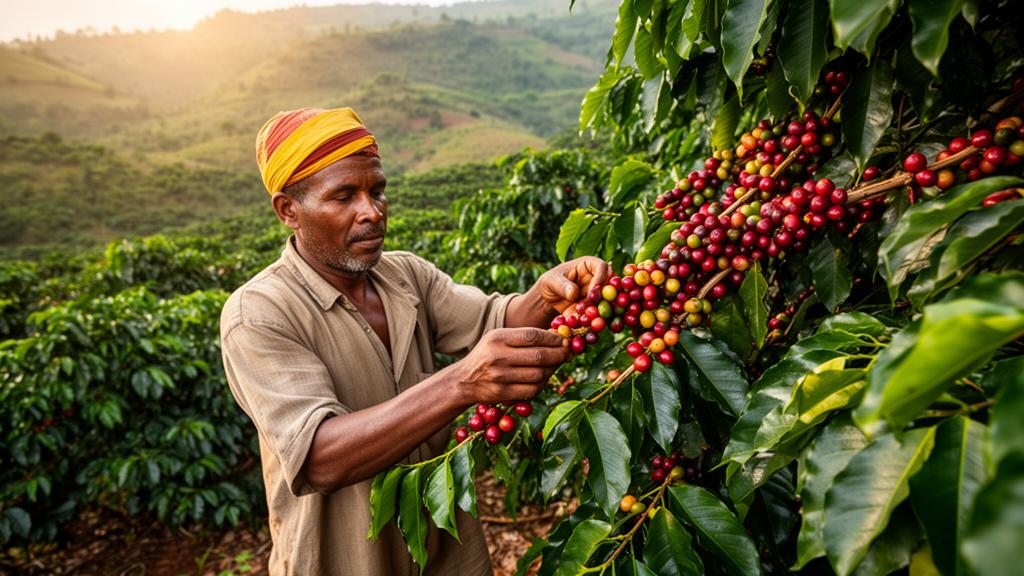
- Harvesting — Cherries are handpicked selectively at peak ripeness, ensuring only the best fruit enters the supply chain.
- Processing — The fruit is removed from the seed via washed (wet), natural (dry), or honey methods.
- Milling — The dried green beans are hulled, sorted, and graded according to Ethiopian standards.
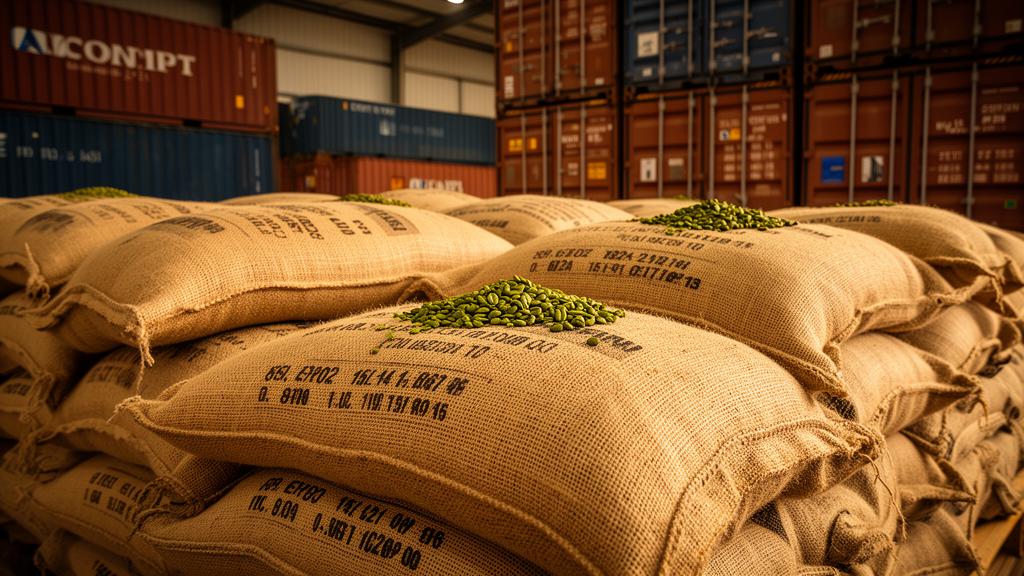
- Exporting — Green beans are bagged in GrainPro-lined jute sacks and shipped to roasters worldwide.
At GreenBean Coffee, every lot we source comes with full traceability — origin, altitude, processing method, and harvest season. We believe knowing your bean's story makes every roast more meaningful.
☕ Origin Spotlight: Ethiopia Yirgacheffe
- Region: Yirgacheffe, Southern Ethiopia
- Altitude: 1,700–2,200 metres above sea level
- Processing: Washed
- Flavour Notes: Jasmine, bergamot, blueberry, lemon zest
- Ideal Roast Profile: Light to City Roast (highlight delicate florals and fruit)
Learn more about Ethiopian growing regions.
Why Do Roasters Choose Green Coffee Beans?
The home roasting movement has grown steadily over the past decade, and for good reason. Here's why more coffee lovers are choosing to roast from green:
- Unbeatable freshness — Roasted-to-order coffee, drunk within days of roasting, is in a different league from pre-packaged supermarket beans.
- Control over the roast — You decide whether that Ethiopian Yirgacheffe is a floral light roast or a more structured medium. The flavour is yours to shape.
- Cost savings — Green coffee beans typically cost 30–50% less per kilogram than equivalent quality roasted coffee.
- Long shelf life — Buy a multi-origin selection and roast what you want, when you want it.
- Connection to origin — Sourcing directly from farms and cooperatives through trusted exporters gives you a meaningful link to the farmers growing your cup.
Whether you're using a popcorn popper, a cast-iron pan, or a dedicated home roasting drum, green coffee beans give you the raw material to craft something truly exceptional.
How Do You Choose the Right Green Coffee Beans?
Not all green beans are created equal. When you're starting out, it helps to understand a few key variables that affect what ends up in your cup.
Origin and Altitude
Higher-altitude beans (above 1,500 metres) tend to be denser, with more complex acidity and nuanced flavour. Ethiopian origins like Yirgacheffe, Sidamo, and Guji are popular with home roasters for their expressive, distinctive profiles — all grown between 1,500 and 2,300 metres.
Processing Method
Washed (wet-processed) beans tend to produce cleaner, brighter cups. Natural (dry-processed) beans often exhibit wilder, fruit-forward flavours with more body. Honey-processed beans sit somewhere in between. If you're new to home roasting, a washed lot is usually easier to work with.
Variety
Ethiopian heirloom Arabica varieties — including Bourbon, Typica, and the thousands of wild landraces unique to Ethiopia — each carry their own flavour tendencies. Learn more about Ethiopian coffee varieties and their characteristics.
Screen Size and Grade
Green beans are graded by defect count and size. Grade 1 Ethiopian coffee allows only 0–3 defects per 300g sample (washed), while Grade 2 permits 4–12 defects. Larger, denser beans from high altitudes roast more evenly and are generally considered higher quality.
How Should You Store Green Coffee Beans?
One of the great advantages of green coffee beans is their longevity — but only if you store them correctly. Here are the golden rules:
- Keep them cool — Room temperature (15–25°C) is ideal. Avoid storing near ovens, dishwashers, or sunny windowsills.
- Avoid moisture — Humidity is the enemy. Store in a cool, dry area. Do not refrigerate (condensation is harmful to green beans).
- Use breathable containers — GrainPro bags, paper bags, or cloth sacks allow the beans to off-gas without moisture build-up. Avoid airtight containers for long-term storage.
- Keep them dark — UV light degrades coffee over time. A dark pantry or cupboard is perfect.
- Label and date — Keep track of origin, lot, and when you received the beans so you can manage your stock and roast the oldest lots first.
Properly stored green beans can remain in excellent condition for 12–24 months — and sometimes longer for particularly dense, low-moisture lots.
How Does Home Roasting Work?
Ready to turn your green beans into something spectacular? Here's a simplified roasting overview to get you started:
| Stage | What's Happening | What to Listen/Look For |
|---|---|---|
| Drying Phase (0–5 min) | Moisture evaporates from the green bean | Beans turn yellow; hay-like aroma |
| Maillard Phase (5–10 min) | Browning reactions begin; sugars caramelise | Colour deepens to tan/brown; sweet bread aroma |
| First Crack (~10–12 min) | Cell walls expand; CO₂ released | Audible cracking sound; light roast achieved |
| Development (12–14 min) | Roast profile deepens | Caramel, chocolate notes emerge; medium roast zone |
| Second Crack (14+ min) | Cell structure fractures further | Quieter, rapid cracking; dark roast territory |
| Quench | Stop the roast and cool beans quickly | Pour onto colander; fan to cool within 4–5 minutes |
A light roast preserves the unique terroir of your origin — those floral, fruity notes from Ethiopian growing regions. A darker roast adds body and bittersweet chocolate character. The beauty of roasting your own green beans is that you decide where on that spectrum to stop.
Where Can You Buy Green Coffee Beans?
Not all suppliers are equal when it comes to green coffee. Here's what to look for when sourcing:
- Full traceability — Country, region, farm or cooperative, processing method, and crop year should all be listed.
- Sample roast notes — A good supplier will include cupping notes or sensory descriptors so you know what to expect.
- Fresh crop lots — Look for "current crop" or "new crop" designations. Avoid "past crop" lots unless you can confirm quality.
- Minimum order flexibility — As a beginner, you want to experiment. Look for suppliers who offer small lots alongside bulk purchasing options.
- Responsive customer support — Especially important when you're starting out and have questions about origins or roast recommendations.
At GreenBean Coffee, we source exclusively from vetted farms and cooperatives across Ethiopia. Every lot is cupped and quality-checked before we list it, and we offer flexible wholesale inquiry options for buyers of all sizes.
Ready to Start Your Roasting Journey?
Explore our full range of traceable, freshly sourced green coffee beans from Ethiopia's finest growing regions. Request samples or a wholesale quote →
Frequently Asked Questions
What are green coffee beans?
How long do green coffee beans last?
How do green coffee beans differ from roasted beans?
Can you roast green coffee beans at home?
GreenBean Coffee Editorial Team
Written by the export and quality control team at GreenBean Coffee, Addis Ababa. Our team has over 15 years of combined experience in Ethiopian specialty coffee sourcing, grading, and international trade logistics. All content is reviewed by licensed Q-graders and certified coffee professionals.
Last reviewed:
Ready to Source Premium Ethiopian Coffee?
Connect with our export team for samples, pricing, and availability. We ship Grade 1 & 2 Arabica to 40+ countries worldwide.