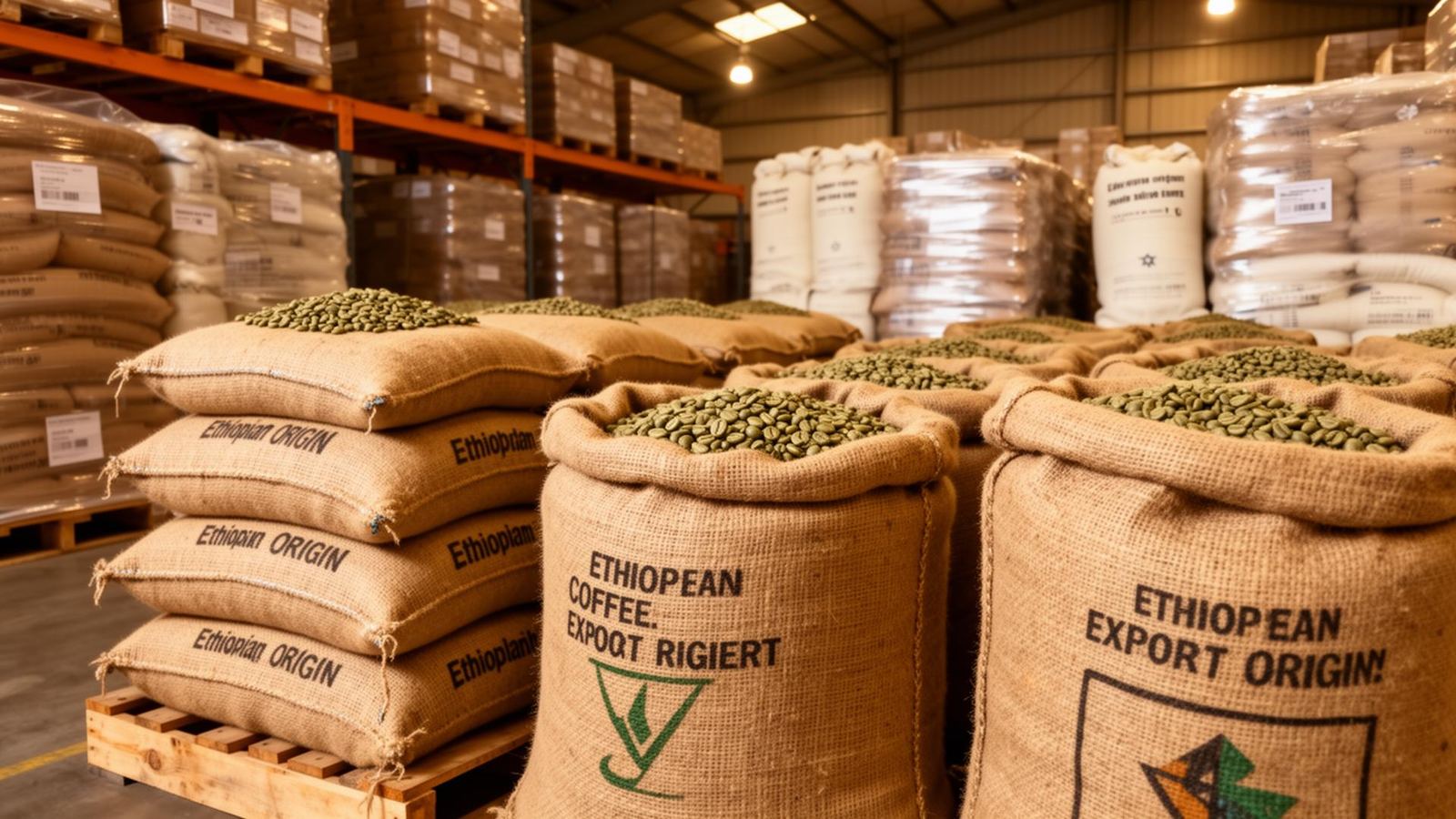
Green Ethiopian coffee entering Canada falls under tariff item 0901.11.00. In the CBSA Customs Tariff for 2026 the duty rate shown for that item is Free, including under the Least Developed Country Tariff that Ethiopia benefits from. The practical work is GST on the imported value, checking whether you need a Safe Food for Canadians licence, and holding the right CBSA account. Confirm each point with your customs broker, as rules change.
Our Trade & Export Logistics guide covers shipping, storage and documentation for any destination. This page covers what is specific to importing into Canada, drawing only on Government of Canada sources listed at the end. It is general information, not customs or tax advice. If you also buy for the UK, see our UK import guide; for the US, see the USA import guide.
What Does Importing Ethiopian Coffee to Canada Involve?
A Canada-bound green coffee shipment involves a customs classification, a check on duty and any preferential tariff, GST, and a check on food-safety licensing. For Ethiopian coffee the duty position is simple; the points that need care are GST, the food import licence, and who accounts for the goods at the border.
How Is Green Coffee Classified and Taxed in Canada?
In the CBSA's Customs Tariff, Chapter 9 (T2026), unroasted, non-decaffeinated coffee is tariff item 0901.11.00, split into 0901.11.00.10 (certified organic) and 0901.11.00.20 (not certified organic). When we checked on 23 October 2026 (the page shows a modified date of 1 January 2026), both items showed Free under the MFN Tariff column and Free under the LDCT and GPT preferential columns. Decaffeinated and roasted coffee are classified separately, so confirm the code for your product.
Does Ethiopia Get Preferential Treatment?
The Department of Finance Canada's page on Canada's unilateral tariff preference programs lists Ethiopia as a Least Developed Country Tariff (LDCT) beneficiary. It describes the LDCT as comprehensive duty-free treatment for virtually all goods from least developed countries (with exceptions such as over-access and supply-managed dairy, poultry and egg products), and says the program was renewed in legislation to 31 December 2034. Because the general MFN rate for green coffee is already Free, the LDCT matters mainly as a safeguard if rates change. Ask your exporter and broker what origin documentation they want to see.
Is GST Charged on Imported Green Coffee?
Section 212 of the Excise Tax Act imposes tax on imported goods at 5% of the value of the goods, payable by every person liable under the Customs Act to pay duty on them (or who would be if the goods were dutiable), and it applies subject to the rest of Part IX of the Act. The CBSA's Memorandum D17-5-1 notes that duties do not include GST, and describes a GST Direct Payment Option for resident importers who use a licensed customs broker. We have not confirmed whether any exemption or relief applies specifically to green coffee, nor how provincial sales tax components apply, so confirm with your broker or the CBSA before pricing a landed cost.
Do I Need a Safe Food for Canadians Licence?
The Canadian Food Inspection Agency's step-by-step guide to importing food states that a licence is required to import food, including food ingredients, and directs importers to its licensing interactive tool to find out whether they need one. CBSA Customs Notice 24-03 says that from 12 February 2024 the SFC licence requirement is verified before import for manufactured foods, lists coffee among them, notes the licence must be held before the shipment is presented at the border, and warns that missing or invalid licences may lead to delays, refusal of entry or enforcement action. The notice also names categories that may not need a licence and refers importers to the CFIA's database for details. Neither source addresses unroasted coffee explicitly, so we do not state either way; ask the CFIA before your first shipment.
How Are Duties and Taxes Paid?
The CBSA's commercial import payments page explains that the Business Number RM account is a 15-digit number assigned by the CRA, used as the account number when paying the CBSA. Importers not in the Release Prior to Payment program must pay duties and taxes when the goods are released, payment must be in Canadian currency, and customs brokers can pay on behalf of importers, including non-resident importers. In practice most buyers use a licensed customs broker. See our wholesale inquiry form and mention that you are importing to Canada so we can plan documents with you.
Sources and Scope of This Page
Jurisdiction: Canada (federal rules). Reviewed: 23 October 2026. Checked against these official sources on that date:
- CBSA Customs Tariff 2026, Chapter 9 (item 0901.11.00 rates)
- Department of Finance Canada: unilateral tariff preference programs (LDCT)
- Excise Tax Act, section 212 (tax on imported goods)
- CBSA Memorandum D17-5-1: payment of duties and taxes
- CBSA: commercial import payments
- CFIA: importing food to Canada, step-by-step guide
- CBSA Customs Notice 24-03: SFC licence to import food
This page is general information, not legal, customs or tax advice, and gives no guarantee about how a particular shipment will be treated.
Frequently Asked Questions
What tariff item applies to green Ethiopian coffee imported into Canada?
Is there customs duty on Ethiopian green coffee in Canada?
Is Ethiopia a beneficiary of Canada's Least Developed Country Tariff?
Is GST payable when importing coffee into Canada?
Do I need a Safe Food for Canadians licence to import green coffee?
GreenBean Coffee Editorial Team
Written by the export and quality control team at GreenBean Coffee, Addis Ababa. Our team has over 15 years of combined experience in Ethiopian specialty coffee sourcing, grading, and international trade logistics. All content is reviewed by licensed Q-graders and certified coffee professionals.
Last reviewed:
Ready to Source Premium Ethiopian Coffee?
Connect with our export team for samples, pricing, and availability. We ship Grade 1 & 2 Arabica to 40+ countries worldwide.