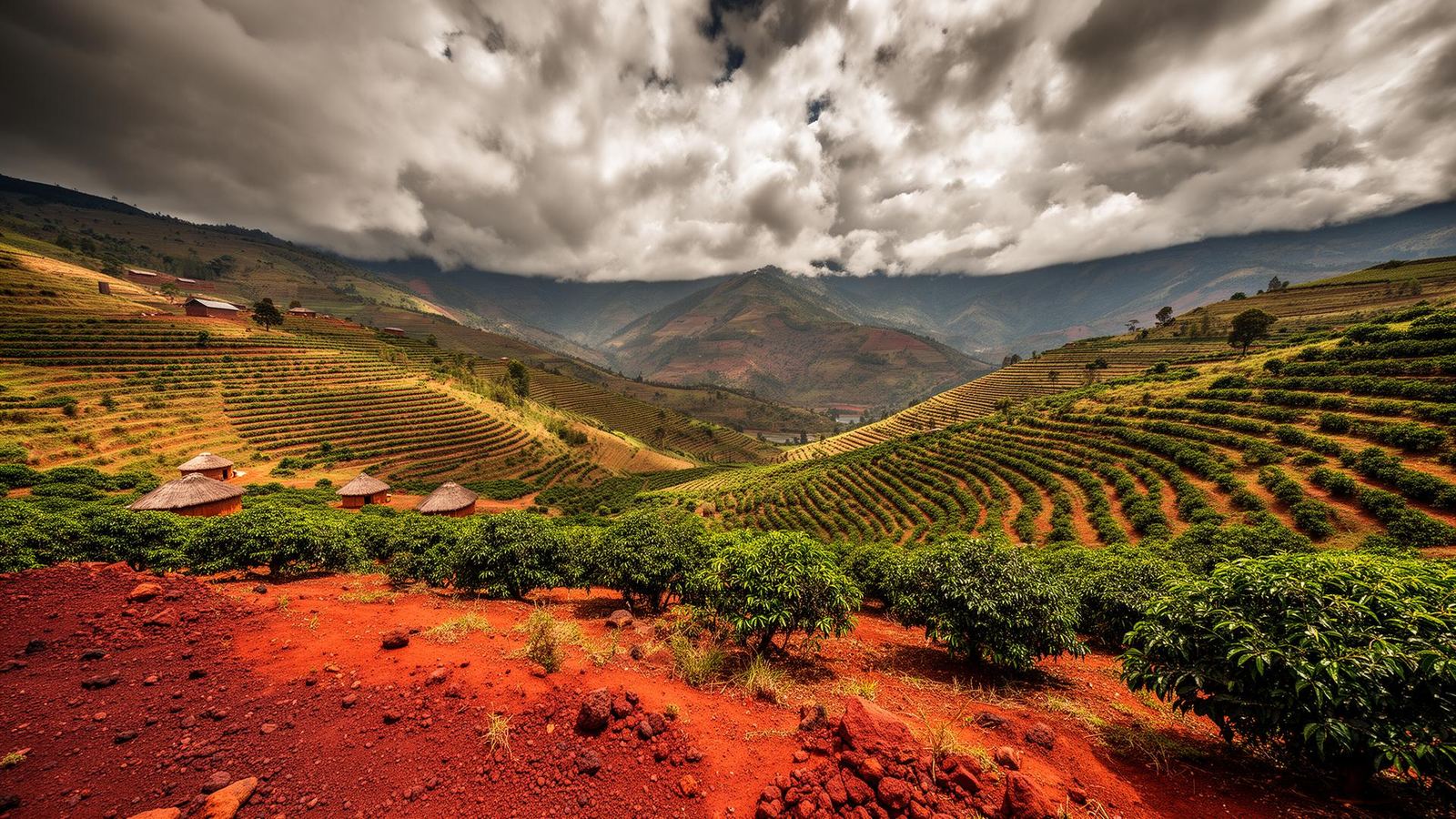
Guji is a coffee-growing zone in Ethiopia's southern Oromia region, producing Arabica at 1,800–2,300 m — the highest average altitude of any major Ethiopian origin. Naturals deliver intense blueberry and tropical fruit; washed lots offer citrus and layered florals. Guji has become the benchmark for fruit-forward Ethiopian naturals among specialty roasters.
What Is Guji Coffee?
Guji coffee is grown in the Guji Zone of Ethiopia's Oromia region, in the southern highlands bordering the Sidama and Bale zones. Until 2002, Guji lots were classified under the broader Sidamo designation — recognition as a distinct origin gave buyers and roasters a name for a cup character that had long been distinct but previously unlabelled.
Production runs through smallholder garden plots and semi-wild agroforestry systems, with forest canopy and volcanic soil shaping the cup: shade slows cherry maturation, and volcanic mineral uptake adds complexity that flat-soil origins can't replicate. Washing-station infrastructure has expanded significantly since the zone's recognition, improving drying-bed traceability and lot documentation.

Why Does Altitude Drive Guji Quality?
Altitude drives Guji coffee quality because higher elevation means cooler temperatures and slower cherry maturation, giving the plant more time to accumulate complex sugars before harvest. Guji's 1,800–2,300m range is the highest of any major Ethiopian producing origin, placing every specialty lot firmly in Strictly High Grown (SHG) territory.
Slower maturation produces denser beans, which retain more soluble compounds through roasting — translating directly to cup intensity and complexity. This is the mechanism behind the cupping scores Guji naturals consistently reach for single-origin espresso and competition programs, not a marketing claim.
Guji Flavor Profile
Natural Guji is defined by intense blueberry, tropical fruit (mango, pineapple), and stone fruit (peach, apricot), with heavy body and wine-like complexity. Washed Guji offers citrus brightness, layered florals, and a cleaner structure with a medium-full body — both heavier and more fruit-forward than a comparable Yirgacheffe.
Natural Guji — typical cupping notes
- Acidity: bright but complex, not delicate
- Aroma: blueberry, tropical fruit, stone fruit
- Body: heavy, syrupy
- Finish: wine-like, long
Washed Guji — typical cupping notes
- Acidity: bright, citrus-forward
- Aroma: layered florals
- Body: medium-full
- Finish: clean, structured
For roasters, washed Guji suits filter programs and light espresso where terroir clarity is the goal; natural Guji is the stronger choice for espresso blending and any slot where fruit intensity and body are the design requirement. See our Yirgacheffe guide for a direct comparison.
Processing in Guji
Both washed and natural processing are available from Guji — an advantage the zone holds over Harrar, where washed processing isn't viable at scale — though naturals dominate the specialty market. Natural processing suits buyers needing fruit intensity and body; washed processing suits those prioritising terroir clarity and brightness. See our processing methods guide for the full breakdown.
Grades and Quality Tiers
Guji is graded under the same ECX system as every other Ethiopian origin: physical defect counts per 300g, cross-referenced with an SCA cupping score.
- Grade 1: 0–3 defects per 300g, SCA 85+ — top specialty
- Grade 2: 4–12 defects, SCA 80–84 — specialty grade
Natural coffees are graded more harshly than washed on physical defect counts, since dry-processing introduces more secondary defects. A well-sourced Guji Grade 2 natural can cup at the same level as a washed Grade 1 from a comparable altitude — cup the lot before filtering by grade label. See the full system in our coffee grades guide.
Guji Harvest Window
- Oct–Jan: Cherry picking across the zone
- Jan–Feb: Processing, drying, dry-milling, and grading
- Feb–Apr: Peak sourcing window — samples available, best Grade 1 naturals still uncommitted
- Jul onward: Old-crop availability thins significantly
Buyers purchasing by the container and planning three to six months ahead should front-load Guji sourcing decisions in Q1. For full-year planning, see the seasonal buying guide.
Buying Guji at Wholesale
- Sample first: Request 250g–1kg sample bags before committing to commercial volume
- Lock fresh crop early: Premium naturals are committed to other buyers by mid-year
- MOQ: One pallet (~600 kg) for mixed containers; one 20ft container (~19,200 kg) for direct trade
Submit a wholesale inquiry on our contact page for current Guji offer lists and FOB pricing.
Guji Sub-Regions and Washing Stations
Buyers increasingly source by named woreda within the Guji Zone:
- Hambela: One of the most internationally recognised sub-origins in Ethiopia — lots consistently score at the top of cupping tables and command premium prices
- Kercha: Home to washing stations including Banko Michicha, established 2011
- Shakiso: High-altitude forest growing conditions; washing stations here include Mulish, well established as one of the zone's best
- Uraga: High-altitude forest terroir producing highly expressive, distinctive coffees
Frequently Asked Questions
What does Guji coffee taste like?
Is Guji better than Yirgacheffe?
Why is Guji coffee altitude so important?
When is the best time to buy Guji coffee?
What is the minimum order for Guji green coffee?
GreenBean Coffee Editorial Team
Written by the export and quality control team at GreenBean Coffee, Addis Ababa. Our team has over 15 years of combined experience in Ethiopian specialty coffee sourcing, grading, and international trade logistics. All content is reviewed by licensed Q-graders and certified coffee professionals.
Last reviewed:
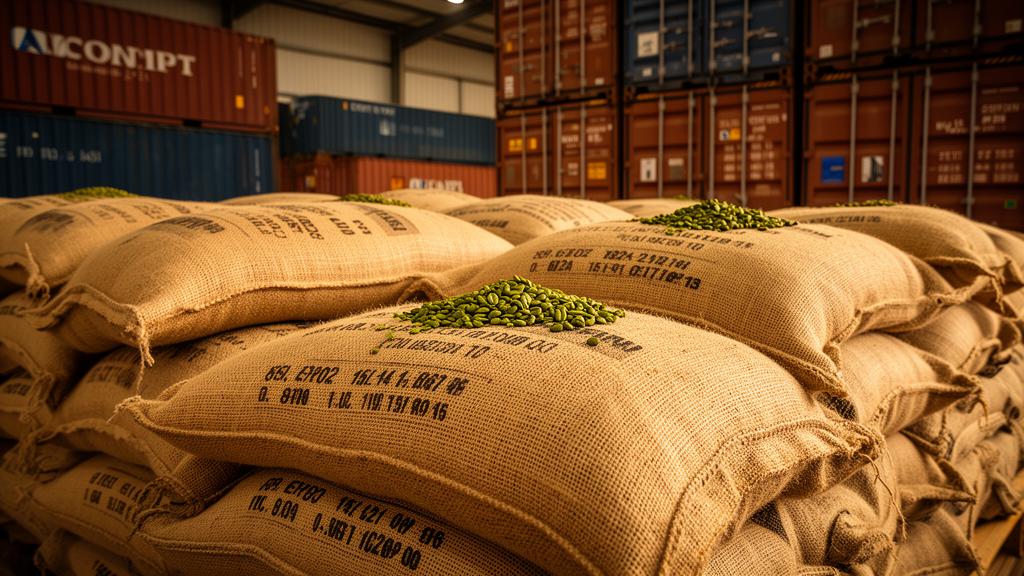
Ready to Source Premium Ethiopian Coffee?
Connect with our export team for samples, pricing, and availability. We ship Grade 1 & 2 Arabica to 40+ countries worldwide.