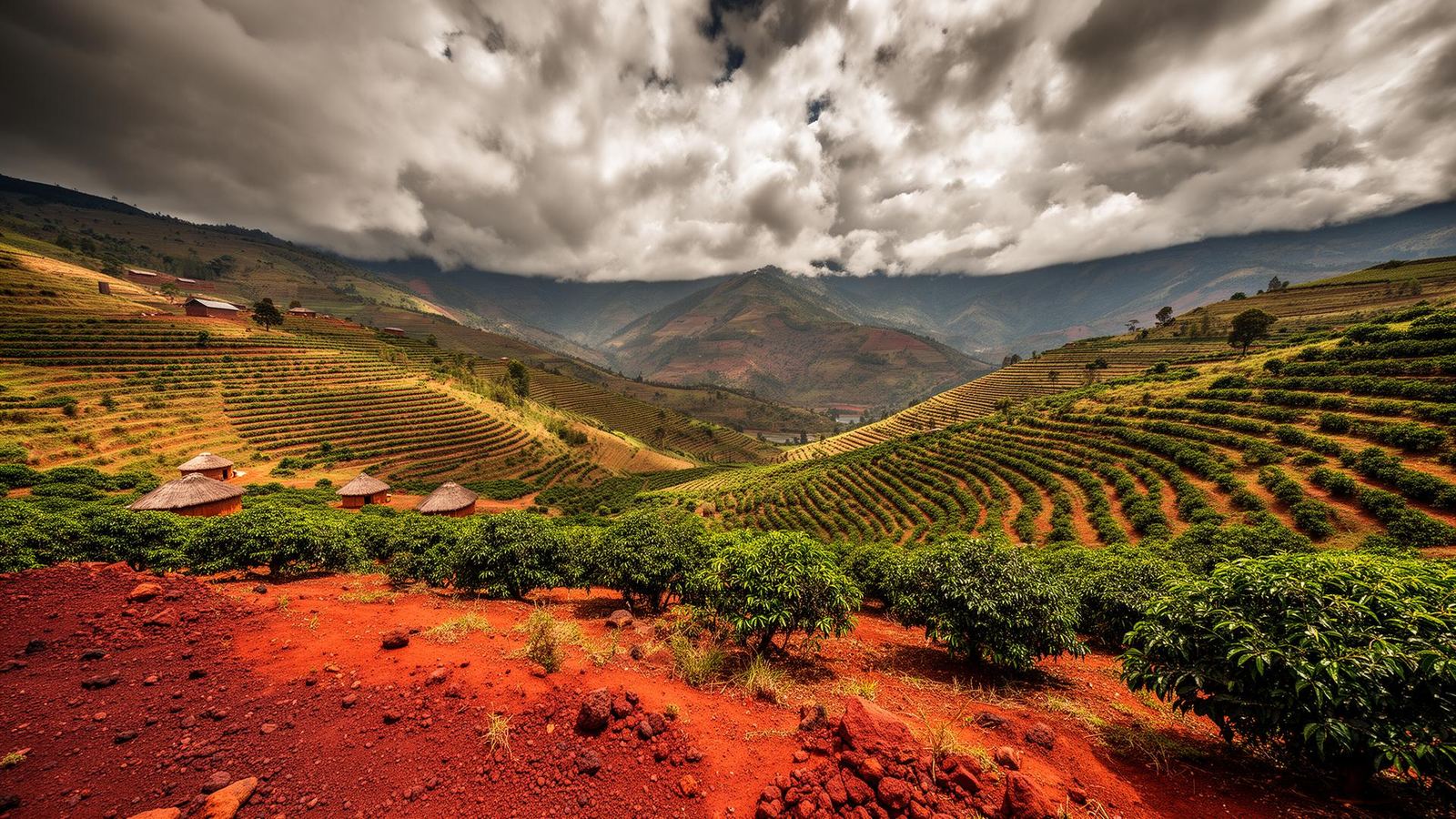
Yirgacheffe is a coffee-growing district in southern Ethiopia's Gedeo Zone, producing Arabica at 1,750–2,200 m on volcanic soils. Washed lots cup floral, citrus, and tea-like; naturals deliver blueberry and tropical fruit. Grade 1 Yirgacheffe routinely scores 85+ SCA and is regarded as a benchmark for African specialty coffee.
What Is Yirgacheffe Coffee?
Yirgacheffe (also spelled Yirgachefe or Yirga Cheffe) is a small woreda within the Gedeo Zone of Ethiopia's Southern Nations, Nationalities, and Peoples' Region. Although the district covers less than 700 km², it has become one of the most recognised origin names in specialty coffee — a category designation under the Ethiopian Commodity Exchange (ECX) that signals a specific cup profile, not just a geographic point.
Production is dominated by smallholder farmers — most cultivating less than one hectare in shaded "garden coffee" systems — who deliver cherry to local washing stations for centralised processing. The combination of indigenous heirloom varieties, high altitude, and meticulous wet-processing is what makes Yirgacheffe a distinct cup, not merely a location.
Terroir, Altitude, and Climate
- Altitude: 1,750–2,200 m above sea level, with premium lots sitting above 1,900 m
- Soil: Deep, well-drained volcanic loam, rich in organic matter
- Rainfall: 1,500–2,500 mm annually, well distributed across two rainy periods
- Temperature: 15–25 °C year-round, moderated by altitude
- Shade: Native trees including Cordia africana and Acacia abyssinica protect cherries and slow maturation
Slow cherry maturation at altitude concentrates sugars and organic acids in the bean — the biochemical foundation of Yirgacheffe's signature acidity and aromatic complexity.
Yirgacheffe Flavor Profile
Washed Yirgacheffe shows lemon-lime acidity, jasmine and bergamot florals, a silky tea-like body, and a clean, lingering finish. Natural Yirgacheffe shifts toward blueberry, strawberry, and tropical fruit with heavier sweetness and full body, while preserving a recognisable floral lift.
Washed Yirgacheffe — typical cupping notes
- Acidity: bright, citric — lemon, bergamot, white grape
- Aroma: jasmine, honeysuckle, black tea
- Body: light to medium, silky, tea-like
- Finish: clean, sweet, floral
- SCA score range: 84–88 (premium lots 88+)
Natural Yirgacheffe — typical cupping notes
- Acidity: rounded, malic — strawberry, ripe stone fruit
- Aroma: blueberry, mango, tropical fruit, cocoa
- Body: medium to full, syrupy
- Finish: long, fruit-forward, wine-like
- SCA score range: 85–89 (top lots 90+)
Processing Methods in Yirgacheffe
Yirgacheffe is overwhelmingly known for fully washed processing, but natural and honey lots have grown rapidly over the last decade. Processing decisions happen at the washing-station level — there are roughly 80+ active washing stations across the district.
- Washed (≈70% of volume): Cherries are pulped, fermented 24–72 hours, washed, then sun-dried on raised African beds for 8–15 days.
- Natural (≈25%): Whole cherries dry on raised beds for 18–28 days with frequent turning to prevent over-fermentation.
- Honey / pulped natural (≈5%): Pulped but not washed; mucilage remains during drying. Produces a profile between washed and natural.
For a deeper comparison, see our processing methods guide.
Grades and Quality Tiers
Yirgacheffe is graded under the Ethiopian Commodity Exchange (ECX) system, combining defect counts with cup quality.
- Grade 1 (Q1): 0–3 defects per 300g, SCA 85+ — top specialty
- Grade 2 (Q2): 4–12 defects, SCA 80–85 — strong specialty value
- Grade 3: Commercial-grade, used for blends
The full system is documented in our coffee grades guide.
Yirgacheffe Harvest Window
- Oct–Jan: Cherry picking; peak in November–December
- Jan–Mar: Processing, drying, dry-milling, and grading
- Mar–Jun: Fresh-crop export; samples available for cupping
- Jul–Sep: Current-crop volumes drawn from exporter warehouses
For full-year planning, see the seasonal buying guide.
Buying Yirgacheffe at Wholesale
Practical considerations for importers, roasters, and distributors:
- Sample first: Request 250g–1kg sample bags before committing to commercial volume.
- Specify processing: Washed and natural Yirgacheffe behave very differently in the roaster — confirm method, drying time, and screen size.
- Lock fresh crop early: Premium washing-station lots (e.g. Konga, Idido, Gedeb) sell out in March–April.
- Storage: Yirgacheffe's delicate aromatics fade faster than denser origins — plan to roast within 9–12 months of arrival.
- MOQ: One pallet (~600 kg) for mixed containers; one 20ft container (~19,200 kg) for direct trade.
Submit a wholesale inquiry on our contact page for current Yirgacheffe offer lists and FOB pricing.
Yirgacheffe Sub-Regions and Washing Stations
Buyers increasingly source by sub-region (kebele) rather than the broader Yirgacheffe label:
- Konga: Bright citrus, jasmine, classic washed profile
- Idido: Floral, bergamot, tea-like; benchmark Q1 lots
- Gedeb: Slightly heavier body, stone fruit, cocoa undertones
- Wenago: Balanced acidity, clean sweetness
- Kochere: Vibrant citrus and floral; widely exported
- Aricha: Known for high-scoring naturals — blueberry, strawberry
Frequently Asked Questions
GreenBean Coffee Editorial Team
Written by the export and quality control team at GreenBean Coffee, Addis Ababa. Our team has over 15 years of combined experience in Ethiopian specialty coffee sourcing, grading, and international trade logistics. All content is reviewed by licensed Q-graders and certified coffee professionals.
Last reviewed:
Ready to Source Premium Ethiopian Coffee?
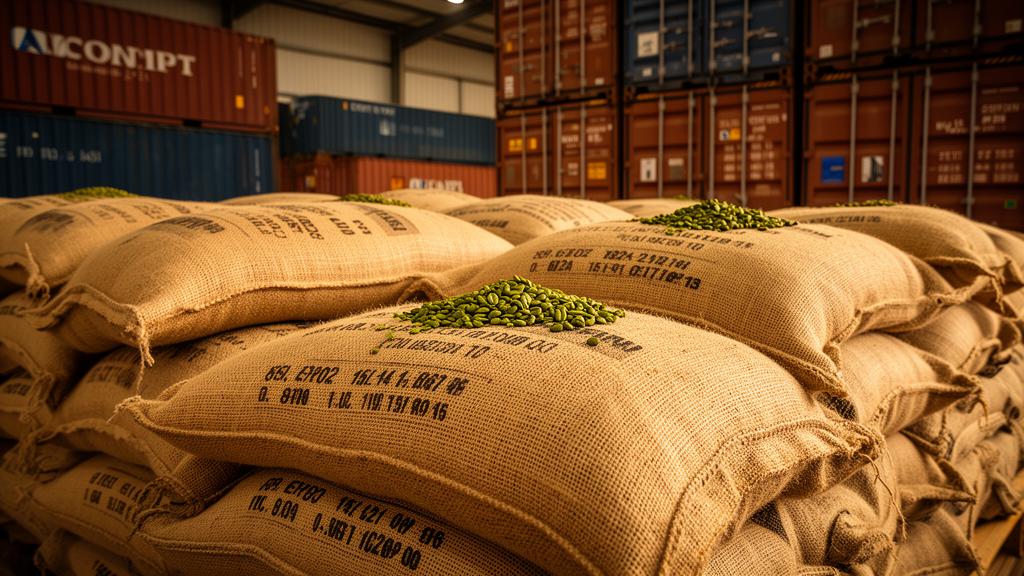
Connect with our export team for samples, pricing, and availability. We ship Grade 1 & 2 Arabica to 40+ countries worldwide.